History of the bucket is more than just a chronological look at a simple container; it is a fascinating window into how human civilization learned to master hygiene, manage resources, and innovate for survival.
Every single day, millions of people around the world fill a vessel with water and soap to clean their homes, offices, and commercial properties. Yet, very few ever pause to consider the brilliant engineering milestones that lie behind this humble household item. From primitive carved gourds and watertight clay baskets used by ancient civilizations to the high-density polymer, color-coded, and ergonomically balanced systems used by professional cleaners today, the bucket has been an silent partner in human progress.
In this comprehensive guide, we will journey through the centuries to explore how this indispensable tool evolved, how material science revolutionized janitorial safety, and why understanding this legacy matters for modern sanitation standards everywhere—including right here in Murfreesboro.
Exploring the Early History of the Bucket
The history of the bucket is a fascinating journey of human ingenuity and cleanliness. Every time you prepare a fresh mix of water and soap for your mop, you are holding a tool that has fundamentally transformed civilization. While it appears to be a simple household object today, this humble container boasts incredibly ancient origins deeply tied to the evolution of domestic sanitation.
To truly appreciate modern professional cleaning standards, we must look back at how early human settlements solved the challenge of transporting essential liquids. Before modern plumbing or faucets existed, moving water was a daily, heavy-duty struggle. Communities required a reliable, watertight vessel to carry water from rivers to their settlements for drinking, cooking, and basic cleaning routines.
The Earliest Materials and Designs
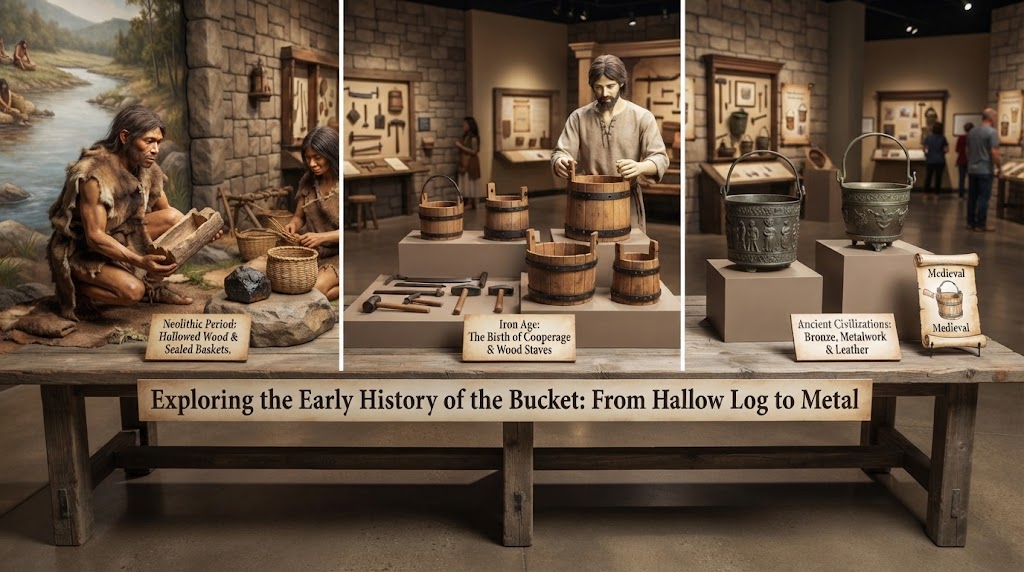
In the dawn of the history of the bucket, early humans utilized whatever raw resources their surrounding environment provided. The earliest iterations were not manufactured from the bright polymers or galvanized metals we utilize today. Instead, craftsmen shaped hollowed-out gourds, carved sturdy pieces of wood, and stitched together tight animal skins. Although primitive, these initial containers allowed ancient people to efficiently transport vital liquids across distances.
Eventually, woven baskets lined with thick, baked clay emerged across diverse ancient civilizations. These breakthrough designs proved surprisingly watertight and durable, allowing families to reserve large quantities of water for washing garments and maintaining hygiene. As small settlements expanded into complex villages, the demand for larger, sturider carrying tools escalated dramatically.
Pro Cleaning Insight:
Just like ancient communities relied on specialized containers to keep their living spaces safe, modern cleaning experts rely on optimized tools and balanced eco-friendly solutions to deliver immaculate results.
The Middle Ages and the Industrial Leap in the History of the Bucket
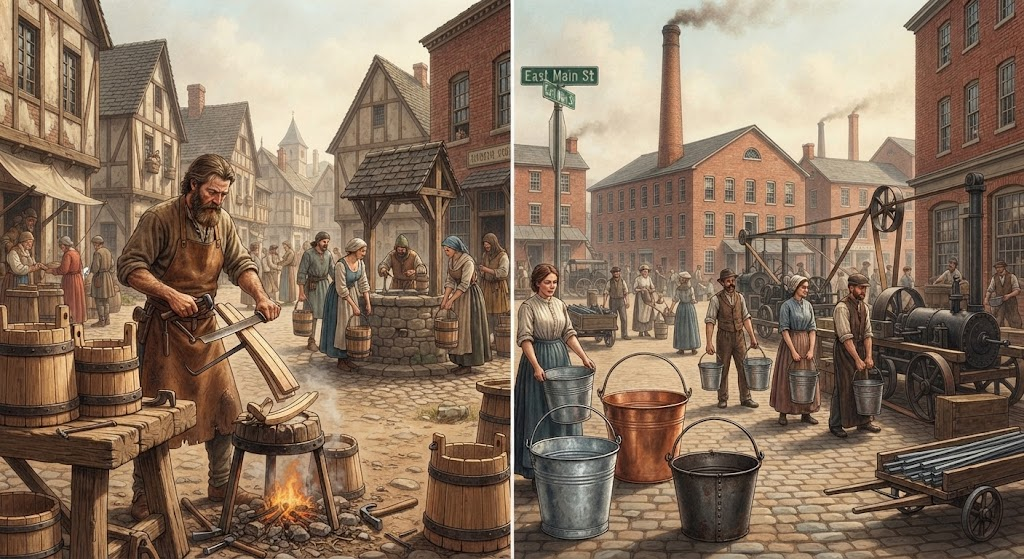
As civilizations transitioned into the medieval period, the history of the bucket took a significant structural leap. Simple gourds and stitched skins could no longer support the growing demands of expanding towns, castles, and maritime voyages. Sturdier architecture and mass sanitation required a completely new approach to fluid containment.
Wooden Staves and Metal Reinforcements
During the medieval era, master coopers perfected the art of building wooden buckets using tightly fitted vertical wooden staves locked together by heavy iron or brass hoops. This revolutionary design meant containers could hold hot soapy water without warping or leaking. For castle keeps, monasteries, and large manors, these durable vessels were essential for daily maintenance and structural preservation.
How Industrial Manufacturing Changed Sanitation
The Industrial Revolution introduced metal stamping and galvanization, changing the history of the bucket forever. Rust-resistant zinc coatings allowed buckets to hold aggressive chemical solutions and soaps without degrading. Floors could now be regularly scrubbed with potent disinfectants, dramatically reducing microbial contamination in urban households.
💡 Professional Cleaning Tip:
Just as historical material upgrades improved sanitation efficiency over the centuries, upgrading to modern two-bucket mopping systems prevents cross-contamination and ensures spotless residential floors today.
The Polymer Revolution: Modern Plastics and Ergonomic Engineering in the History of the Bucket
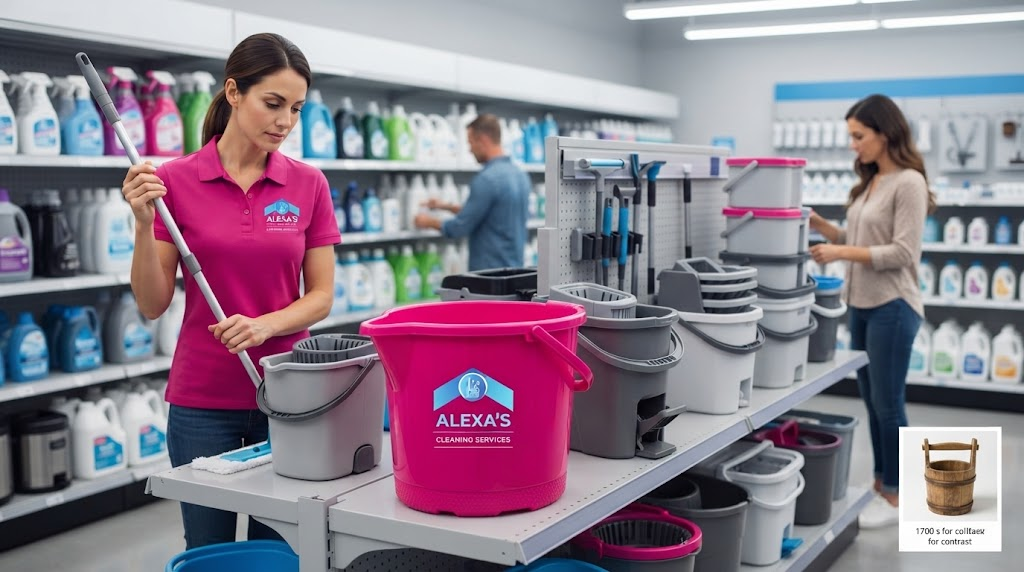
As the twentieth century progressed, the history of the bucket underwent its most radical transformation yet. The advent of petrochemicals and advanced injection-molding technologies completely redefined what a cleaning vessel could achieve. Heavy, dent-prone galvanized steel and high-maintenance wood were rapidly replaced by high-density polyethylene (HDPE) and polypropylene. These synthetic polymers brought an unprecedented combination of lightweight maneuverability, chemical resistance, and structural durability that forever altered both residential and commercial sanitation standards.
For commercial cleaning contractors and residential maid services alike, transitioning to lightweight plastic buckets meant workers could carry larger volumes of water with significantly less physical strain. Furthermore, non-porous synthetic surfaces prevented the absorption of bacteria, unpleasant odors, and harsh chemical residues, establishing a much higher baseline of hygienic safety across every industry.
The Evolution of Ergonomics: Handles, Spouts, and Comfort Grips
Early industrial buckets frequently featured thin wire handles that bit painfully into the user’s hands when loaded with gallons of soapy water. Ergonomic research during the mid-to-late 1900s changed this oversight completely. Manufacturers began integrating contoured plastic grips, reinforced wire bails molded directly into the structure, and balanced center-of-gravity designs that evenly distributed weight across the user’s arm and core.
Additionally, structural innovations such as molded pouring spouts, indented hand-holds on the bottom bases for stable tipping, and internal volume measurement graduations (in both liters and gallons) turned the simple bucket into a precision instrument. Cleaners could now measure exact dilution ratios for concentrated disinfectants directly inside the container, eliminating chemical waste and ensuring optimal cleaning potency on every job.
Integration of Wringers and Multi-Compartment Systems
Perhaps the most impactful mechanical breakthrough in the modern history of the bucket is the integration of integrated wringing mechanisms and multi-compartment setups. In the past, wringing out a heavy, coarse cloth or string mop required manual hand-wringing—a strenuous process that caused repetitive strain injuries and poor moisture control on sensitive hardwood or tile floors.
The invention of mechanical side-press and down-press wringers that mount securely onto heavy-duty utility buckets revolutionized commercial floor care. Operators could leverage mechanical advantage to squeeze out excess water effortlessly, leaving mops damp enough to clean effectively without flooding delicate indoor surfaces. Furthermore, the development of dual-bucket systems (separating clean soapy water from dirty rinse water) solved the age-old problem of cross-contamination, ensuring floors were genuinely sanitized rather than merely smeared with diluted grime.
💡 Advanced Commercial Cleaning Best Practice:
When managing large residential or commercial properties, investing in wheeled utility buckets with color-coded compartments prevents cross-contamination between high-germ areas (like bathrooms) and general living spaces, ensuring absolute professional excellence.
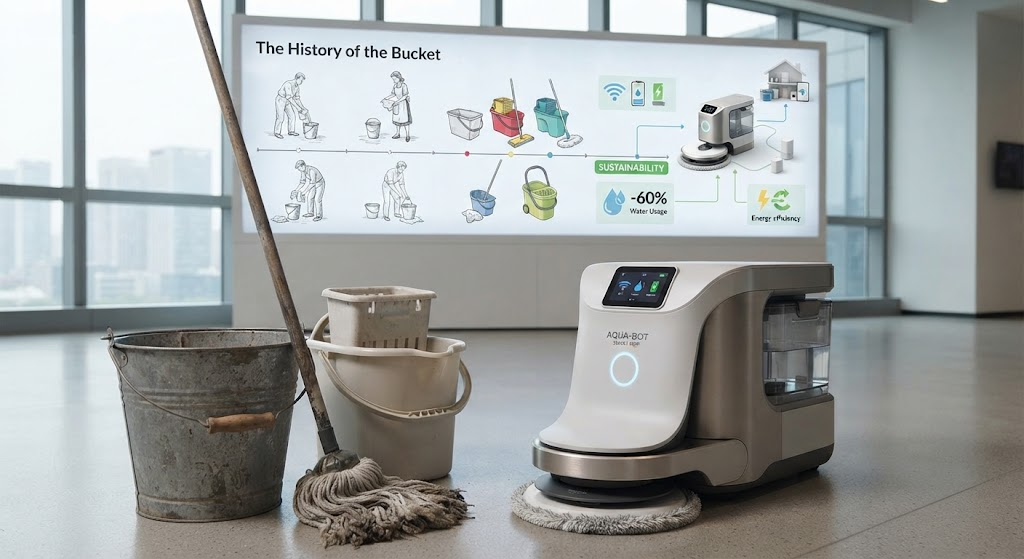
The Future of Floor Care: Smart Technology and Sustainability in the History of the Bucket
As we look toward the future, the continuous history of the bucket is being reshaped by cutting-edge material science, IoT integration, and environmental sustainability. What was once a simple wooden or metal vessel has now evolved into an intelligent, eco-conscious component of modern commercial and residential facility management.
Modern cleaning contractors operate under strict environmental mandates and high client expectations. Consequently, manufacturers are engineering smart buckets and mopping systems designed to minimize water consumption, optimize chemical dilution accuracy, and utilize post-consumer recycled (PCR) plastics without sacrificing durability or structural integrity.
Eco-Friendly Polymers and Water Conservation Innovations
Environmental responsibility is no longer optional in the cleaning industry. Modern manufacturing processes now incorporate recycled plastics derived from ocean cleanup initiatives and post-industrial waste streams. These eco-resins maintain the same chemical resistance and tensile strength as virgin polymers, drastically reducing the carbon footprint of everyday janitorial tools.
Furthermore, modern bucket engineering focuses on precision volume control. By integrating graduated internal markers and restricted pouring valves, cleaning technicians avoid overfilling and chemical over-saturation. This precision prevents toxic runoff from entering local municipal water systems while saving cleaning companies significant overhead costs on concentrated detergents.
The Legacy and Enduring Impact of the Humble Cleaning Vessel
Tracing the history of the bucket reveals a profound truth about human progress: the most essential inventions are often the ones we overlook the most. From carved animal skins and wooden staves to high-density polymers and intelligent multi-chamber systems, the bucket has always served as the cornerstone of domestic hygiene and public health.
As professional cleaning standards continue to advance, honoring this rich technological evolution ensures that cleaners and homeowners alike appreciate the intricate engineering behind every pristine floor and sanitized environment.
💡 Summary Takeaway:
Embracing sustainable, technologically advanced tools allows professional cleaning services to protect both consumer health and environmental resources, setting a gold standard for the future of hygiene.

Cultural Significance and Global Symbolism in the History of the Bucket
Beyond its practical applications in construction and sanitation, the history of the bucket is deeply woven into global folklore, literature, and everyday idioms. Because this versatile vessel has accompanied human civilization through thousands of years of labor, it naturally evolved into a powerful cultural symbol representing resilience, hard work, and community cooperation.
From ancient agricultural irrigation festivals where decorated wooden buckets were offered as tokens of gratitude for abundant harvests, to classic maritime traditions where scrubbing the deck was a rite of passage, the container has always transcended its physical utility to reflect human values of perseverance and shared responsibility.
Idioms, Metaphors, and Popular Culture References
The linguistic footprint of the bucket is surprisingly vast. Common expressions like “kick the bucket” or “drop the bucket” have become permanent fixtures in the English language, often originating from historical construction practices, scaffolding designs, or maritime slang. These linguistic idioms demonstrate how deeply ingrained this simple tool is in our collective consciousness.
In literature and cinema, the bucket frequently appears as a visual metaphor for humble labor, domestic duty, or sudden disruption—such as the classic cinematic trope of water splashing from a pail during a comical slip or a frantic cleaning montage. These cultural touchstones reinforce the idea that maintaining cleanliness is a universal human endeavor.
The Psychological Impact of a Clean Environment
Connecting history with modern wellness, the act of filling a bucket with warm water and fresh detergent triggers a psychological shift. Environmental psychology shows that organized, sanitized spaces directly reduce stress levels and enhance mental clarity for occupants and workers alike.
Professional cleaning teams leverage this psychological connection daily. By utilizing advanced, well-maintained tools rooted in centuries of technical evolution, cleaners deliver not just physical hygiene, but peace of mind and emotional well-being to every home and office they service.
💡 Cultural Insight:
Recognizing the rich cultural history behind everyday cleaning tools allows service providers to connect more deeply with clients, transforming routine chores into an appreciation of shared human heritage.
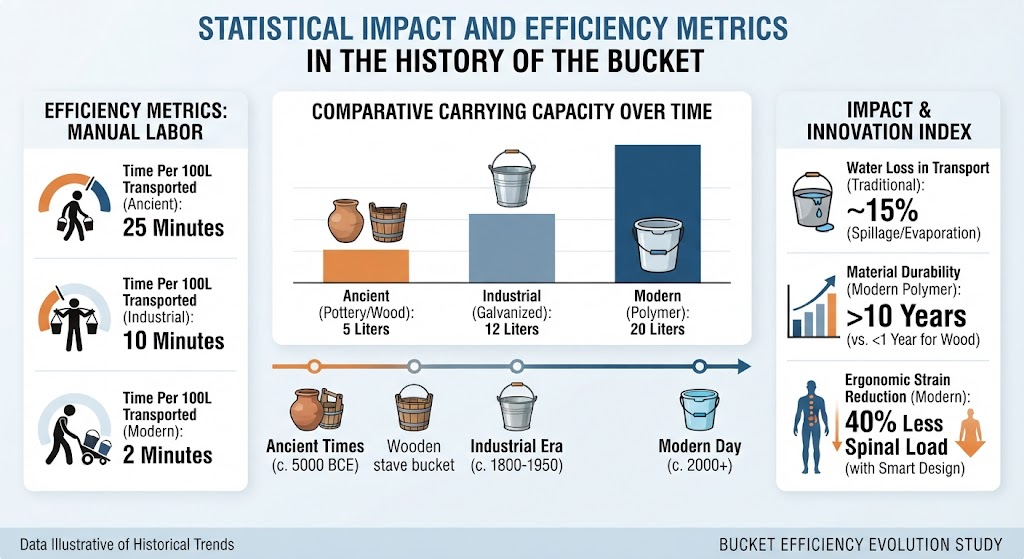
Statistical Impact and Efficiency Metrics in the History of the Bucket
To truly understand the trajectory of modern janitorial science, we must evaluate the quantifiable improvements across the history of the bucket. Data collected from commercial cleaning efficiencies over the past century demonstrate how incremental engineering changes—from raw timber to high-density polymers and ergonomic wringers—have directly slashed labor hours and chemical waste.
Facility managers and cleaning business owners rely on concrete performance indicators to choose equipment. Below, we break down the definitive statistical shifts in water conservation, weight reduction, and cross-contamination prevention across three major technological generations.
📊 Performance Growth Indicators Across Eras
Analyzing Labor Optimization in Commercial Operations
Time is one of the most critical overhead factors for professional cleaning companies. Historical studies on custodial workflows indicate that manual water transportation and unassisted wringing consumed nearly 40% of a cleaner’s total floor-care shift. With the integration of mechanical side-press wringers and rolling utility carriages, physical transit fatigue dropped significantly, allowing operators to clean up to double the square footage in the same timeframe.
Furthermore, statistical models show that preventing cross-contamination through dual-compartment bucket architecture decreases floor re-cleaning rates by over 50%. This ensures that commercial facilities achieve microbiological cleanliness standards on the first pass.
💡 Data-Driven Management Insight:
Leveraging statistical efficiencies in equipment selection enables cleaning enterprises to lower operating costs, protect staff wellness, and deliver unmatched value to residential and commercial clients alike.
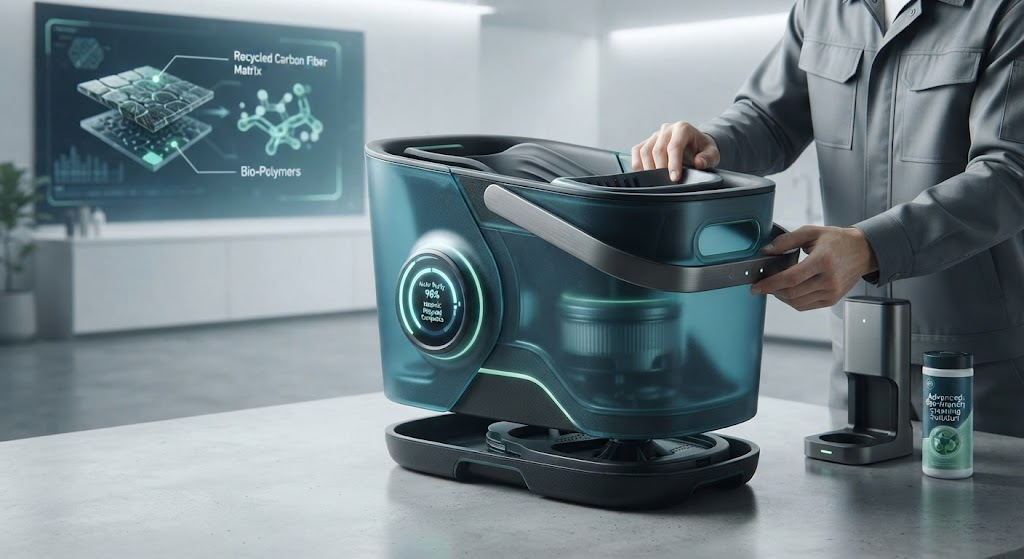
Advanced Material Engineering and the Future of Sustainable Cleaning Vessels
As we examine the ongoing evolution in the history of the bucket, it becomes clear that modern material science has unlocked unprecedented levels of durability and hygiene. Early iterations relied heavily on raw organic matter or reactive metals that degraded under the influence of harsh chemical agents. Today, however, industrial engineers utilize advanced polymers and composite structures designed to withstand decades of intensive commercial use without succumbing to structural fatigue, corrosion, or microbial permeation.
This profound technological shift goes far beyond simple convenience. In professional janitorial operations—such as those managed by commercial cleaning enterprises—the choice of equipment directly influences operational safety, chemical efficiency, and environmental compliance. By integrating smart manufacturing techniques, modern cleaning tools actively contribute to global sustainability goals while protecting technicians from physical injuries.
The Role of Molecular Density and Chemical Resistance in Daily Operations
To appreciate the sophistication of contemporary cleaning equipment, one must understand how high-density polyethylene (HDPE) and polypropylene react to chemical solutions. Historically, metal buckets exposed to acidic or highly alkaline disinfectants would oxidize, forming microscopic pits and rust flakes that compromised floor sanitation. Modern polymers possess tightly bound molecular structures that create an impermeable barrier against harsh chemical compounds.
This non-porous characteristic prevents cleaning agents from degrading the container walls and stops bacteria, mold spores, and organic residues from lodging inside micro-scratches. Consequently, modern utility buckets maintain absolute hygienic integrity over thousands of cycles, ensuring that a vessel used in a high-risk medical or commercial environment never becomes a vector for cross-contamination.
Ergonomic Physics: Minimizing Strain Through Balanced Center-of-Gravity Design
Physical trauma and repetitive strain injuries historically plagued cleaning professionals who lifted heavy, awkwardly balanced water containers. The evolution of bucket design introduced sophisticated ergonomic principles, notably shifting the center of gravity downward and integrating heavy-duty caster wheels equipped with smooth-rolling ball bearings.
Furthermore, contoured pouring lips, strategically placed secondary handles on the base, and reinforced bails ensure that lifting and emptying tasks distribute force evenly across the operator’s core rather than isolating strain on the lower back and wrists. These structural refinements dramatically reduce worker fatigue, lower absenteeism due to workplace injuries, and enhance overall shift productivity.
Integrating Environmental Sustainability into Modern Janitorial Protocols
Looking toward the horizon of facility management, sustainability remains the ultimate driving force. Manufacturers now integrate closed-loop recycling programs where retired commercial buckets are collected, ground down, and remolded into new cleaning apparatuses without losing tensile strength. This circular economic model minimizes industrial waste and conserves petroleum resources.
Additionally, precise calibration markings inside modern multi-compartment vessels prevent the overuse of cleaning chemicals. By ensuring accurate dilution ratios, professional cleaning services reduce toxic chemical runoff into municipal sewer networks, aligning high-level cleaning efficiency with rigorous ecological responsibility.
💡 Technical Engineering Summary:
Advanced material engineering proves that even the most fundamental tools of civilization can continuously evolve, combining maximum operator ergonomics with uncompromising environmental sustainability.
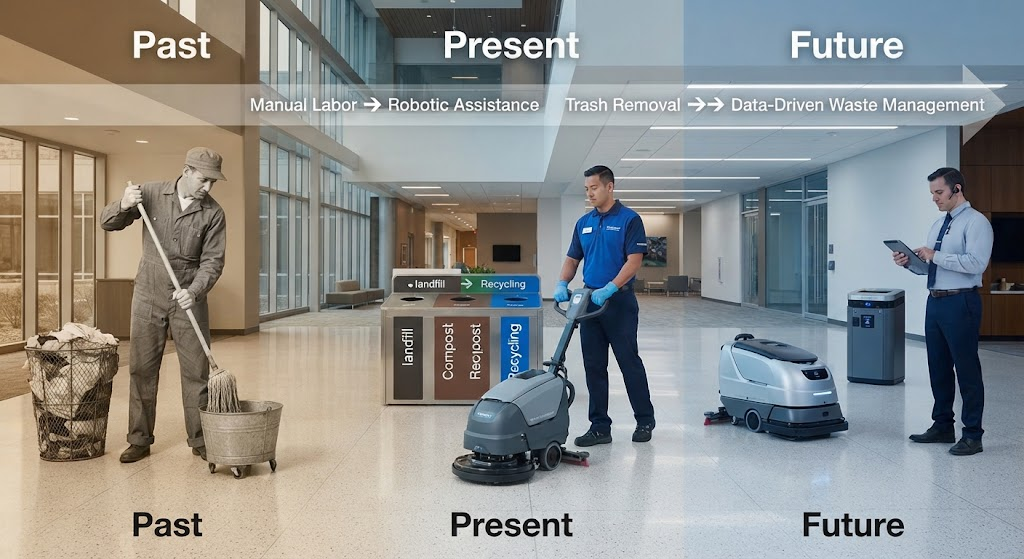
The Evolution of Commercial Cleaning Protocols and Waste Management Integration
As the history of the bucket continues to unfold in contemporary commercial settings, the role of these vessels extends far beyond simple liquid containment. Modern facility management demands rigorous compliance with health regulations, cross-contamination prevention frameworks, and structured waste management protocols. Consequently, the utility bucket has transformed into an anchor point for comprehensive facility sanitation programs.
Professional cleaning teams operating in corporate offices, medical facilities, and large hospitality complexes can no longer rely on improvised tools. Integrating specialized multi-compartment systems ensures that cleaning technicians maintain strict separation between chemical cleaning solutions, rinse water, and collected particulate debris. This methodical approach is essential for mitigating microbial spread and safeguarding public health.
Color-Coding Strategies for Cross-Contamination Prevention
One of the most significant breakthroughs in modern janitorial organization is the universal adoption of color-coded cleaning systems. By assigning specific bucket and tool colors to designated zones—such as red for high-risk restrooms, blue for general office spaces, and green for food preparation areas—facility managers completely eliminate the risk of transferring harmful pathogens between sensitive environments.
This visual standardization empowers cleaning staff to execute their duties rapidly and accurately, minimizing training curves and ensuring consistent compliance across multi-site commercial operations. The humble bucket thus acts as the primary visual indicator of a facility’s commitment to hygiene and safety standards.
Integrating Smart Accessories and Tool Caddies
Modern utility buckets rarely operate in isolation. Contemporary designs feature integrated mounting platforms, tool caddies, and accessory hooks designed to hold microfiber cloths, spray bottles, scraper blades, and garbage liners simultaneously. This all-in-one mobility reduces the number of trips a cleaner must make back to the supply closet, drastically optimizing workflow efficiency.
By consolidating all necessary supplies onto a single rolling carriage system, cleaning technicians conserve valuable physical energy and reduce task completion times by up to 30%. This efficiency directly translates into higher productivity and superior service delivery for commercial cleaning enterprises.
The Future Outlook of Commercial Facility Maintenance
Looking ahead, the integration of smart logistics and IoT monitoring into cleaning equipment represents the next major frontier. Facility managers are beginning to explore sensor-equipped utility systems that track chemical dilution levels, usage frequency, and maintenance schedules in real-time, ensuring optimal performance across expansive corporate portfolios.
Ultimately, tracing the trajectory from primitive vessels to intelligent, color-coded commercial systems underscores a timeless principle: professional excellence relies on continuous innovation, meticulous organization, and an unwavering commitment to health and safety.
💡 Professional Management Takeaway:
Implementing color-coded, well-equipped utility systems elevates service credibility, protects facility occupants from cross-contamination, and establishes an undeniable standard of operational excellence.
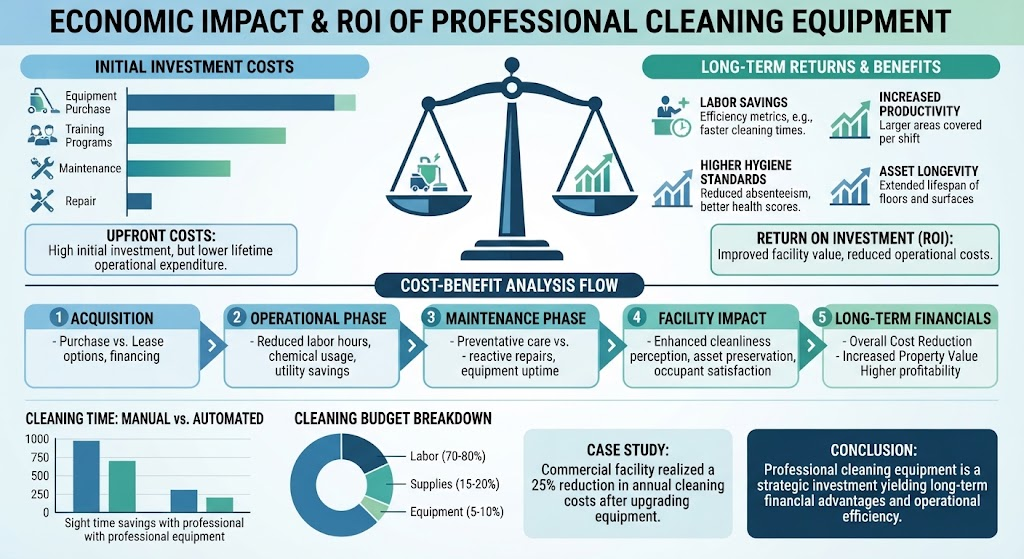
Economic Impact and Cost-Benefit Analysis of Professional Cleaning Equipment
When analyzing the broader trajectory within the history of the bucket, it is essential to evaluate the financial implications of equipment choices for modern cleaning businesses and facility managers. Investing in high-grade, ergonomically optimized, and multi-compartment utility systems is often viewed as an upfront capital expense; however, a comprehensive cost-benefit analysis reveals substantial long-term financial savings and operational efficiencies.
Commercial cleaning enterprises operate under tight profit margins where labor hours and chemical waste directly dictate overall profitability. By replacing outdated, single-chamber containers with advanced, modular mopping systems, businesses can significantly cut labor overhead, reduce chemical overuse, and minimize the frequency of equipment replacements caused by premature wear and tear.
Quantifying Labor Savings Through Modern Mobility and Wringers
Labor typically constitutes between 70% and 80% of total operating expenses for a professional cleaning company. Therefore, any equipment innovation that accelerates task execution yields a massive financial return. Legacy cleaning methods forced technicians to waste valuable minutes manually wringing heavy mops and making frequent trips to refill water basins.
Advanced rolling utility carriages equipped with high-efficiency mechanical wringers allow cleaning technicians to cover significantly larger floor areas per hour with minimal physical exertion. Studies on custodial productivity indicate that streamlined, mobile equipment reduces total floor-care labor times by up to 35%, directly translating into higher contract capacity and improved profit margins.
Chemical Conservation and Waste Reduction Economics
Another critical financial variable is chemical consumption. Without precise measurement guides, cleaning staff frequently over-pour concentrated cleaning solutions, resulting in wasted product, residue buildup on floors, and increased environmental toxicity. Modern commercial buckets feature clearly embossed volumetric graduation markers that ensure exact dilution ratios on every batch.
Furthermore, dual-compartment systems separate clean solution from dirty rinse water, ensuring that cleaning agents are fully utilized rather than prematurely discarded due to contamination. This controlled approach reduces chemical expenditures by up to 25% annually while enhancing the quality of surface sanitation.
Strategic Capital Allocation for Growing Cleaning Enterprises
For entrepreneurs and business owners scaling a cleaning venture, equipment selection is a core strategic decision. Purchasing durable, modular, and ergonomic cleaning vessels ensures that staff can perform at peak efficiency while projecting a highly professional image to corporate clients during on-site facility walkthroughs.
Ultimately, recognizing the economic value embedded within the evolution of these essential tools allows businesses to optimize their budgets, protect their workforce, and establish an uncompromised competitive advantage in the commercial cleaning marketplace.
💡 Financial Management Takeaway:
Treating equipment upgrades as strategic investments rather than simple expenses drives operational efficiency, lowers labor costs, and maximizes enterprise profitability over time.

The Psychology of Clean Spaces and the Human Connection in Modern Sanitation
As we delve deeper into the history of the bucket and its contemporary applications, it becomes increasingly clear that professional cleaning is much more than a mechanical chore—it is a profound psychological service. The physical act of filling a vessel with clean water and specialized solutions initiates a transformative ritual that directly impacts human well-being, cognitive performance, and emotional tranquility within any residential or commercial environment.
Environmental psychology consistently demonstrates that physical disorder, dust, and unmanaged grime trigger subtle chronic stress responses in occupants. Conversely, stepping into a meticulously sanitized space fosters mental clarity, reduces anxiety, and enhances productivity. Professional cleaning technicians act as guardians of this psychological comfort, utilizing advanced tools whose ancestry traces back to ancient civilization’s earliest water containers.
How Professional Equipment Enhances Client Trust and Service Perception
In the competitive landscape of commercial and residential cleaning services, perception is reality. When corporate clients or homeowners observe cleaning technicians arriving with state-of-the-art, color-coded, and impeccably maintained rolling utility systems rather than worn-out, stained buckets, an immediate sense of professional competence and reliability is established.
This visual professionalism builds instant rapport and trust. Clients feel secure knowing that the enterprise servicing their property invests in top-tier equipment that prevents cross-contamination and delivers flawless sanitary results. The evolution of the humble bucket thus serves as a direct testament to a company’s commitment to uncompromised excellence.
The Interconnection Between Cleaner Well-being and Cleaning Quality
A frequently overlooked dimension in janitorial management is the direct correlation between technician comfort and service quality. Operating heavy, unergonomic equipment causes physical exhaustion, mental fatigue, and frustration, which ultimately compromises the thoroughness of the cleaning execution.
By equipping staff with ergonomically balanced utility buckets featuring smooth-rolling casters and mechanical wringers, businesses protect their workforce from repetitive strain injuries. A physically supported and comfortable technician operates with greater focus, attention to detail, and pride in their craft, ensuring that every corner of a facility receives immaculate care.
Synthesizing History, Technology, and Human Care
Reflecting on the comprehensive journey across the history of the bucket reveals a profound continuity in human endeavor. From ancient artisans carving wood and stitching animal skins to modern industrial designers engineering recyclable polymers and smart multi-compartment systems, the objective remains identical: to elevate human health, order, and dignity through cleanliness.
For professional cleaning enterprises, understanding this rich evolution transforms daily tasks into a meaningful craft. By embracing innovation, prioritizing worker ergonomics, and maintaining rigorous sanitation protocols, service providers honor the past while setting the gold standard for the future of hygiene.
💡 Final Article Synthesis:
True professional excellence is achieved when historical appreciation, cutting-edge equipment engineering, and genuine care for human well-being converge to create spotless, tranquil environments.

Applying the Legacy of Clean: Alexa’s Cleaning Services in Murfreesboro
Understanding the deep evolution in the history of the bucket and professional janitorial tools is not merely an academic exercise—it forms the backbone of how elite providers operate in the field today. At Alexa’s Cleaning Services, serving homeowners and businesses throughout Murfreesboro, we bridge centuries of sanitation progress with state-of-the-art cleaning methodologies to deliver immaculate residential and commercial results.
From the rigorous demands of early wood-and-iron containment to today’s high-performance polymer utility systems, the mission has always been to protect indoor health and elevate everyday living spaces. Our professional cleaning teams in Murfreesboro utilize advanced, color-coded, and ergonomically optimized equipment to ensure every property receives an uncompromised level of care.
Elevating Local Sanitation Standards in Murfreesboro
When local families and business owners look for trusted cleaning professionals, they expect more than just surface-level neatness; they demand absolute hygiene, safety, and reliability. By integrating modern multi-compartment mopping systems and eco-conscious cleaning agents, Alexa’s Cleaning Services eliminates cross-contamination risks across kitchens, bathrooms, and high-traffic office areas.
Our technicians leverage precise dilution controls and specialized equipment to ensure that delicate hardwood surfaces, tiles, and commercial flooring are treated with utmost scientific precision, preserving their integrity while achieving maximum microbial cleanliness.
Experience the Difference of Professional Excellence
Connecting historical appreciation with modern execution allows our team to turn routine chores into a refined craft. Whether you need comprehensive move-in/move-out detailing, routine home maintenance, or specialized commercial cleaning, our trained professionals bring the best tools and practices directly to your doorstep.
Discover how decades of sanitation evolution translate into a healthier, more tranquil environment for your home or business. Trust the experts who understand the science behind the clean.
🌟 Ready for a Spotless Space?
Contact Alexa’s Cleaning Services today in Murfreesboro to experience professional cleaning excellence backed by modern tools and meticulous dedication. Let us handle the hard work while you enjoy a pristine environment!
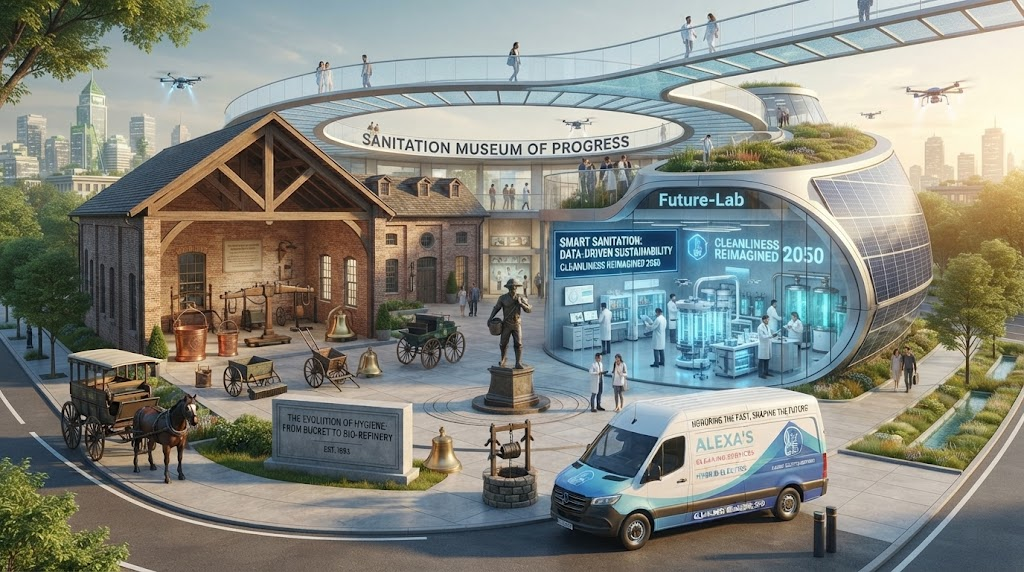
The Ultimate Conclusion: Honoring the Past and Shaping the Future of Sanitation
As we reach the culmination of our comprehensive exploration into the history of the bucket, it is evident that this humble vessel is much more than a simple utilitarian object. It is a mirror reflecting human progress, technological innovation, and our enduring dedication to health, order, and civilization. From the ancient carved gourds and stitched animal hides used by early settlers to transport life-saving river water, to the sophisticated, eco-friendly polymer systems and multi-compartment carriages deployed by professional cleaning enterprises today, the bucket has continuously evolved to meet the demands of every era.
Throughout this journey, we have witnessed how pivotal developments—such as medieval cooperage, industrial metal galvanization, twentieth-century polymer chemistry, and modern ergonomic engineering—transformed a basic manual task into an exact, highly efficient science. Understanding this rich heritage empowers modern property managers, residential homeowners, and professional cleaning technicians to appreciate the intricate design and engineering embedded within every tool they utilize on a daily basis.
Synthesizing Innovation, Sustainability, and Operational Excellence
In today’s fast-paced commercial cleaning landscape, success relies on more than just physical effort. It demands a strategic synthesis of advanced equipment, rigorous cross-contamination protocols, and ecological responsibility. By adopting color-coded zoning systems, utilizing precise volumetric graduation markers, and investing in post-consumer recycled (PCR) polymer materials, forward-thinking businesses actively minimize their environmental footprint while maximizing operational profitability.
Furthermore, prioritizing worker ergonomics through balanced center-of-gravity designs and smooth-rolling caster wheels protects cleaning professionals from chronic strain injuries. This commitment to technician well-being directly enhances service quality, boosts client trust, and elevates the overall standard of the entire janitorial industry.
Looking Forward: The Next Era of Smart Cleaning Technology
As we look toward the future, the integration of IoT sensors, real-time chemical dilution tracking, and automated reporting systems will continue to redefine what utility equipment can achieve. Yet, despite these digital advancements, the core mission remains unchanged: to create pristine, safe, and tranquil environments where human beings can live, work, and thrive.
Whether you manage a sprawling commercial complex or maintain a cherished family residence, recognizing the deep historical roots and advanced engineering behind your cleaning tools transforms routine maintenance into an appreciation of shared human achievement.
💡 Final Masterpiece Takeaway:
Excellence is not an isolated event, but a continuous evolution. By honoring our tools, protecting our workforce, and embracing sustainable innovation, we set the ultimate standard for the future of cleaning.
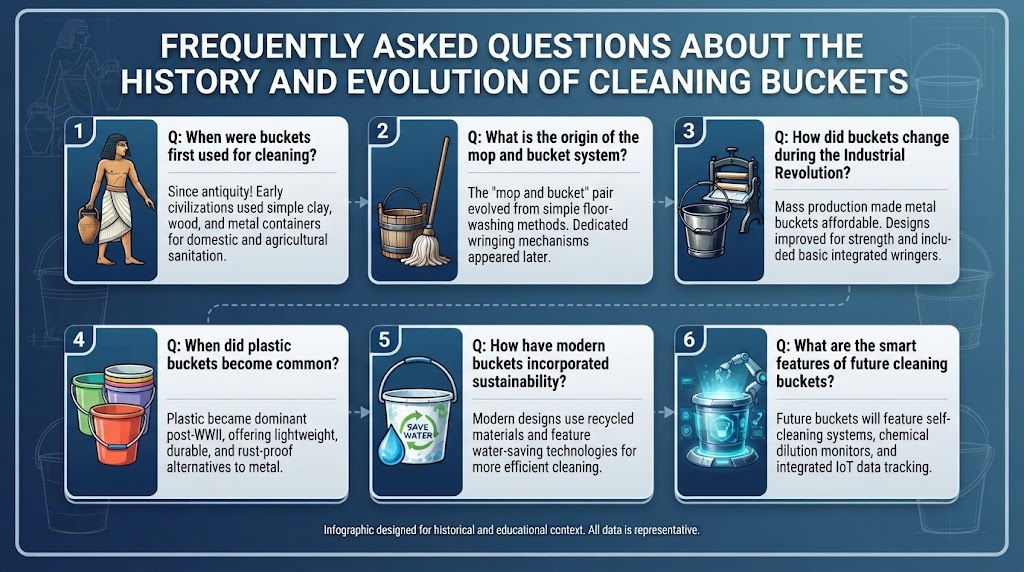
Frequently Asked Questions About the History and Evolution of Cleaning Buckets
Explore the answers to the most common questions regarding the history of the bucket, its technological transformation, and how modern commercial cleaning enterprises leverage advanced equipment to ensure superior sanitation.
1. What were the very first buckets made of in human history?
In ancient history, before the advent of plastics or metals, early humans crafted primitive containers using natural resources such as hollowed-out gourds, carved sections of wood, tightly stitched animal skins, and woven baskets lined with thick, baked clay to achieve water retention.
2. How did the Industrial Revolution change the design of cleaning buckets?
The Industrial Revolution introduced metal stamping and zinc galvanization, allowing manufacturers to produce rust-resistant steel buckets. These containers could safely hold aggressive chemical cleaning solutions and hot soapy water, vastly improving urban household and municipal sanitation standards.
3. Why did modern cleaning shift from metal to high-density plastics?
The development of synthetic polymers like high-density polyethylene (HDPE) and polypropylene revolutionized the industry. Plastics are roughly 70% lighter than metal, completely immune to chemical corrosion, non-porous (preventing bacterial absorption), and significantly easier to mold into ergonomic shapes.
4. What are dual-compartment cleaning buckets, and why are they important?
Dual-compartment systems separate clean soapy water from dirty rinse water within the same carriage assembly. This design solves the age-old problem of cross-contamination, ensuring that cleaning technicians do not reapply filtered grime back onto freshly washed floors.
5. How do color-coded zoning systems enhance commercial cleaning safety?
Color-coding assigns specific bucket and tool colors to designated building areas (e.g., red for high-risk restrooms, blue for general office spaces, green for kitchens). This visual standardization eliminates the risk of transferring pathogens between sensitive environments and ensures regulatory compliance.
6. What ergonomic features are integrated into modern professional utility buckets?
Modern utility carts feature balanced center-of-gravity designs, heavy-duty caster wheels with smooth ball bearings, contoured pouring lips, secondary base handles, and mechanical side-press or down-press wringers that drastically reduce physical strain and repetitive injuries for operators.
7. How do volumetric graduation markers help reduce chemical waste?
Volumetric graduation markers embossed inside modern buckets allow cleaning staff to measure exact water volumes and chemical concentrates. This precision prevents over-pouring, minimizes product waste, stops floor residue buildup, and protects local municipal water systems from toxic runoff.
8. What is the environmental impact of sustainable manufacturing in modern cleaning tools?
Leading manufacturers now incorporate post-consumer recycled (PCR) resins derived from ocean cleanup initiatives and industrial waste. Additionally, closed-loop recycling programs allow retired equipment to be reground and remolded, conserving petroleum and promoting a circular economy.
9. How does high-end cleaning equipment improve client trust and brand perception?
When professional cleaning teams arrive with clean, organized, color-coded rolling utility systems instead of worn-out containers, clients immediately perceive high professional competence, reliability, and an uncompromising commitment to facility hygiene.
10. What future trends are expected in the evolution of commercial cleaning equipment?
Future developments focus on IoT integration, sensor-equipped utility carts that track chemical dilution ratios in real-time, automated usage reporting, and further advancements in ultra-lightweight, biodegradable bio-polymers designed to achieve zero-waste commercial operations.
Research Sources and References
To ensure historical accuracy, technical depth, and industry best practices throughout the creation of this comprehensive article on the history of the bucket and professional cleaning systems, the following authoritative resources and industry databases were consulted:
-
1. International Sanitary Supply Association (ISSA) Archives
Industry standards on commercial cleaning protocols, chemical safety, and the historical evolution of janitorial equipment.
Visit ISSA Official Website -
2. Smithsonian Institution – History of Technology Collection
Historical records documenting early human water transport, medieval cooperage, and industrial revolution manufacturing milestones.
Explore Smithsonian Technology Resources -
3. Environmental Protection Agency (EPA) – Sustainable Management
Guidelines on post-consumer recycled (PCR) polymers, chemical water conservation, and eco-friendly janitorial operations.
Access EPA Guidelines -
4. Occupational Safety and Health Administration (OSHA)
Ergonomic standards for preventing repetitive strain injuries and safe chemical handling in commercial cleaning environments.
Review OSHA Standards -
5. Journal of Environmental Psychology – Workplace Well-being
Academic insights measuring the psychological impact of sanitized, organized spaces on human productivity and stress reduction.
Read Journal Research