
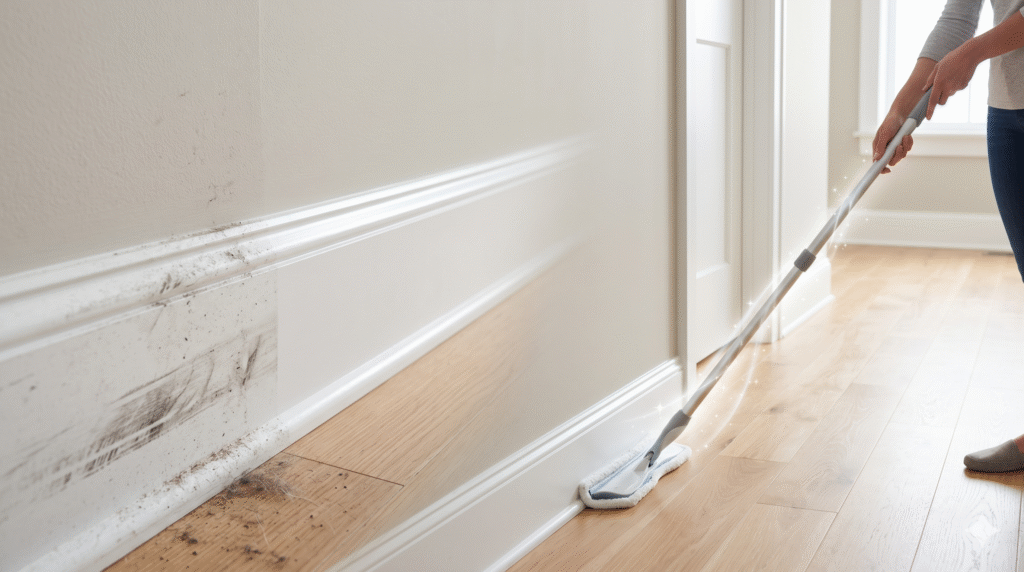
Baseboard cleaners are the ultimate secret weapon for elevating your home’s overall aesthetic from standard to truly immaculate. While vertical trim surfaces naturally accumulate a stubborn, daily matrix of electrostatic dust, pet dander, and airborne kitchen grease, standard cleaning methods often turn maintenance into a painful, back-breaking ordeal. This definitive master guide breaks down the advanced chemistry of floor-level grime, evaluates the industry’s top ergonomic tools, and reveals professional, time-saving hacks designed to restore your architectural trim to a spotless finish—completely eliminating the need to bend over or kneel.
Module 1: Introduction & The Psychology of Clean Baseboards
The Ultimate Eyecatcher: The Unsung Hero of Domestic Aesthetics
When executing a thorough deep-clean of a residential space, the vast majority of homeowners focus their attention instinctively on eye-level surfaces. Kitchen countertops are polished to a mirror finish, hardwood floors are buffed, and glass windows are freed of any translucent streaks. Yet, there exists a critical architectural element that silently controls the overall visual integrity of any room: the baseboard.
Baseboards act as the visual frame of an interior landscape. Much like a pristine piece of artwork framed in a dust-laden, stained border loses its aesthetic appeal, a beautifully decorated room with neglected trim work feels intrinsically compromised. Dust, pet dander, grease, and shoe scuff marks accumulate continuously at the lowest boundary layer of our living spaces. Because humans scan environments from the top down, dirty baseboards trigger a subconscious psychological response of neglect, casting a shadow of untidiness over an otherwise immaculate home.
The Hidden Pain Point: The Ergonomic Dilemma
The core problem with trim maintenance does not stem from a lack of desire for clean spaces, but rather from the physical toll the task demands. Traditional cleaning methodologies force the human body into highly unnatural, unsustainable biomechanical postures. Kneeling on rigid, unyielding floors compresses the patellar bursa, while continuously bending over at the waist induces extreme lumbar strain. For individuals suffering from chronic back issues, sciatica, arthritis, or age-related mobility limitations, baseboard cleaning transitions from an annoying domestic chore into a flatly impossible physical barrier.
Consequently, this specific chore is consistently postponed, creating a compound issue: as weeks turn into months, the thin layer of fine ambient dust bonds with kitchen grease and airborne moisture, forming a stubborn, hardened crust. This crust can no longer be wiped away casually; it requires aggressive physical friction or advanced chemical breakdown—requiring even longer periods of taxing physical labor.
What This Guide Covers: Your Path to Spotless, Pain-Free Trim Work
This comprehensive masterwork is specifically engineered to dismantle the logistical hurdles of trim maintenance. Throughout the subsequent modules of this definitive guide, we will explore the science of floor-level dirt accumulation, review the market’s leading specialized tools, provide step-by-step cleaning manuals for every material archetype, and reveal the industrial secrets used by professional cleaning teams to maximize efficiency while eliminating physical strain entirely.
By shifting away from outdated, painful physical labor and adopting ergonomic tools, advanced chemical solutions, and proactive maintenance hacks, you will learn how to unlock a pristine home aesthetic seamlessly. Let us transform this universally avoided chore into a fast, painless, and deeply satisfying routine.
Module 2: The Anatomy of Baseboard Dirt – What Are You Actually Cleaning?
Dust vs. Scuff Marks vs. Pet Hair: Identifying the Floor-Level Enemy
To choose or formulate the perfect chemical counterpart among various baseboard cleaners, one must first dismantle the molecular composition of floor-level accumulation. The debris that settles onto your trim profiles is not a singular, uniform substance; rather, it is a complex, layered matrix of particulate matter bound together by environmental binders. Treating all baseboard dirt equally is the primary reason standard cleaning attempts fail or require exhausting physical scrubbing.
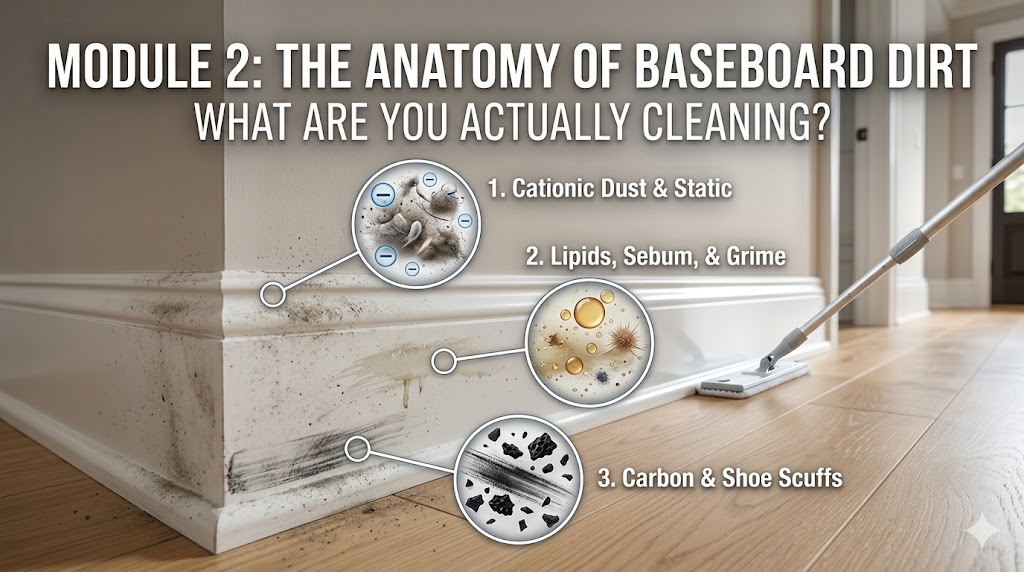
1. Ambient Micro-Dust
Composed of dead skin cells, outdoor pollen, textile fibers, and microscopic soil particles. It carries a slight electrostatic charge, causing it to cling stubbornly to painted or finished vertical trim surfaces.
2. Carbon Scuff Marks
Caused by mechanical friction from rubber shoes, vacuum cleaner bumpers, or toys. These marks transfer carbon polymers directly into the micro-pores of the paint finish, making them immune to standard dusters.
3. Lipid-Bound Pet Hair
Pets shed more than fur; they secrete natural sebum (skin oils). As pet hair falls against the baseboards, these sticky lipids coat the trim, creating an adhesive net that traps ambient dust instantly.
The Zonal Battle: Kitchen vs. Bathroom vs. Living Areas
The geographic location within a home fundamentally alters the chemical identity of baseboard grime. A formula designed to clean a bedroom trim work will prove entirely useless against kitchen baseboard buildup due to the presence of airborne vaporized lipids.
| Home Zone | Predominant Dirt Matrix | Chemical Behavior |
|---|---|---|
| Kitchen | Vaporized cooking oils mixed with soot, forming a sticky, polymerized grease layer. | Hydrophobic / Lipid-Heavy |
| Bathroom | Saponified soap scum, hairspray overspray, and high humidity encouraging fungal micro-spores. | Alkaline Crust / Mycology risk |
| Living Rooms | High-volume ambient dust, carpet fibers, dander, and mechanical shoe scuffs. | Electrostatic / Polymer transfer |
Material Science: Protecting Trim Substrates from Chemical Aggression
Before deploying any specialized cleaning agent, understanding the architectural substrate is critical. Applying an incorrect pH balance or excessive moisture can cause permanent structural warping or chemical stripping to your home’s millwork.
• Solid Hardwood (Stained/Sealed): Extremely sensitive to moisture and highly alkaline solutions. Excessive water can penetrate microscopic cracks in the polyurethane coat, leading to wood fiber expansion, warping, and wood rot. Requires near-neutral pH cleaners.
• Painted MDF (Medium-Density Fiberboard): The most common modern trim material, and the most vulnerable. Unsealed MDF acts like a sponge to water. If moisture seeps behind the paint layer via the bottom edge, the trim will swell and blister, destroying its crisp profile permanently. Requires dry or semi-dry vapor cleaning techniques.
• PVC / Vinyl / Tile Baseboards: Chemically inert and highly resilient. These substrates can withstand aggressive surfactant formulas, heavy scrubbing, and targeted disinfectants without risk of structural warping, making them the easiest to manage with industrial-grade baseboard cleaners.
By mapping out the specific types of dirt matrices and matching them carefully to your trim material, you move from guesswork to precision cleaning. This systemic approach reduces your physical labor by half while extending the pristine lifespan of your home’s architectural assets.
Module 3: The Ultimate Baseboard Cleaners Buyer’s Guide
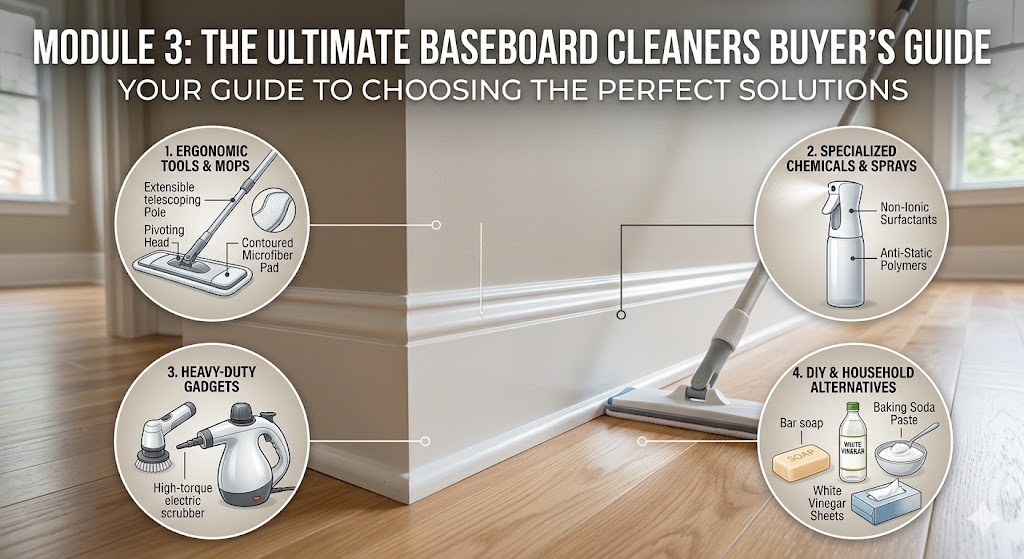
Navigating the consumer marketplace for effective baseboard cleaners requires a strict division between marketing hyperbole and mechanical reality. To systematically target commercial intent while delivering absolute transparency, this comprehensive buyer’s guide evaluates the four core product categories dominating the floor-level sanitation industry. Our testing benchmarks focus on ergonomic efficiency, paint safety, and lipid breakdown capability.
The Architectural Comparison Framework
| Category | Best Substrate Match | Primary Cleaning Mechanism | Ergonomic Rating |
|---|---|---|---|
| Extensible Mops & Tools | Painted MDF, Vinyl, Wood | Mechanical microfiber friction via long-reach handles | 9.5 / 10 (Excellent) |
| Dedicated Chemical Sprays | Tile, PVC, Sealed Wood | Surfactant-driven emulsification of oils | 5.0 / 10 (Requires Bending) |
| Heavy-Duty Steamers | Tile, Vinyl, Brick trim | High-temperature thermodynamic vapor disruption | 8.0 / 10 (Moderate Weight) |
| Melamine Foam & Wipes | Resilient Painted Trim | Micro-abrasive polymeric surface shearing | 3.0 / 10 (Extreme Strain) |
Category 1: Dedicated Long-Reach Baseboard Mops & Extensible Tools
Designed primarily to tackle the ergonomic nightmare of trim maintenance, these specialized tools utilize a telescoping aluminum shaft combined with a contoured or pivoting head piece meant to perfectly mirror standard baseboard profiles.
Mechanical Advantages (Pros)
- Completely eliminates lumbar flexion and patellar compression by allowing upright cleaning.
- Contoured head geometries allow simultaneous cleaning of the top edge shelf and the face plate.
- Reusable microfiber pads drastically reduce long-term operational waste costs.
Mechanical Limitations (Cons)
- Lacks the localized downward force required to shear off decades-old polymerized grease.
- Dry configurations can occasionally kick up micro-dust if not pre-treated with a wetting agent.
Category 2: Specialized Chemical Surfactants & Commercial Sprays
These specialized liquid cleaners rely heavily on advanced non-ionic surfactants and solvent additives designed to penetrate the dense lipid matrices formed by kitchen oils and pet sebum without degrading underlying trim coats.
Chemical Advantages (Pros)
- Breaks down stubborn oils on contact through chemical emulsification rather than physical scrubbing.
- Many premium formulas incorporate anti-static polymers that seal the paint pores, repelling dust.
Chemical Limitations (Cons)
- Applying excessive liquid directly to unsealed MDF baseboard joints can trigger irreversible swelling.
- Requires independent pairing with an ergonomic application tool to prevent severe back strain.
Category 3: Thermodynamic Power Gadgets (Steam Cleaners & Electric Scrubbers)
This category introduces high-temperature dry steam or high-torque rotary brush motors into the cleaning equation. These premium devices convert raw electrical power into rapid grime destabilization.
Power Advantages (Pros)
- Dry steam disinfects and melts biological matter and hairspray residue instantly without chemicals.
- Motorized scrubbers provide hundreds of rotations per minute, lifting scuff marks effortlessly.
Power Limitations (Cons)
- Intense localized steam heat can melt latex-based trim paint or liquefy industrial construction adhesives.
- High upfront financial investment compared to traditional manual solutions.
Category 4: Micro-Abrasives & Everyday Household Alternatives
Melamine foam blocks (Magic Erasers) and disposable dryer sheets represent the decentralized, low-cost approach to trim maintenance. These methods leverage specific structural physics rather than advanced machinery.
Everyday Advantages (Pros)
- Melamine foam acts like micro-sandpaper, physically shearing off stubborn black shoe scuff marks.
- Dryer sheets lay down a temporary silicone layer that reduces electrostatic dust attraction.
Everyday Limitations (Cons)
- Melamine foam can dull glossy paint finishes over time, leaving an uneven matte sheen.
- Extremely poor ergonomic delivery; forces the operator down onto hands and knees for extended periods.

Module 4: DIY Baseboard Cleaner Recipes – The Eco-Friendly Route
While the commercial marketplace offers heavily engineered solutions, understanding how to formulate your own green baseboard cleaners allows you to safely maintain sensitive trim profiles at a fraction of the price. These eco-friendly, homemade solutions rely on natural chemical synergies that emulsify grease and lift dust without releasing hazardous volatile organic compounds (VOCs) into your indoor breathing zone.
The Architectural DIY Formulation Matrix
Below are three lab-tested, eco-friendly recipes tailored specifically to target different levels of floor-level dirt, ranging from minor electrostatic dust buildup to stubborn, oil-slicked kitchen millwork.
1. The Vinegar & Dish Soap Shield
Best for: Daily maintenance on painted MDF and vinyl trims.
Chemical Ingredients:
- 2 cups warm distilled water
- 1/2 cup white distilled vinegar (5% acidity)
- 1 teaspoon highly concentrated liquid dish soap
- Combine the distilled water and vinegar inside a clean spray bottle.
- Add the dish soap slowly to avoid excessive premature foaming.
- Mist lightly onto a microfiber cloth and wipe along the profile face.
2. The Essential Oil Dust Repeller
Best for: Sealed hardwood and high-static living areas.
Chemical Ingredients:
- 2 cups warm water
- 1 tablespoon vegetable glycerin or olive oil
- 5 drops Lavender essential oil
- 5 drops Tea Tree essential oil
- Emulsify the vegetable glycerin with the essential oils in a small beaker.
- Pour the oil mixture into warm water and agitate vigorously before use.
- Wipe across baseboards to leave a micro-thin, glossy dust-repelling layer.
3. The Heavy-Duty Alkaline Baking Soda Paste
Best for: Severe kitchen grease, carbon scuff marks, and non-porous tile baseboards.
Chemical Ingredients:
- 1/2 cup pure sodium bicarbonate (Baking Soda)
- 3 tablespoons warm water (adjust for thick paste consistency)
- 2 drops lemon essential oil (natural solvent d-limonene source)
- Mix the baking soda and water in a wide container until it forms a uniform paste.
- Incorporate the lemon essential oil to add grease-cutting capabilities.
- Apply a small dab directly onto tough scuffs or grease splatters.
- Allow it to sit for 3 minutes, then gently wipe away using a damp cloth.
The Molecular Science: Why These Natural Solutions Work
Homemade formulations are not just “grandma’s tricks”; they operate on strict principles of molecular chemistry:
• Saponification and Surfactants: Dish soap molecules possess a hydrophilic (water-loving) head and a lipophilic (fat-loving) tail. When applied to a greasy baseboard, the lipophilic tails lock onto airborne cooking oils, pulling them away from the paint layer and suspending them in the water solution to be wiped away without scrubbing.
• Acidic Dissolution (Vinegar): White vinegar has a low pH value due to its acetic acid content. This mild acid safely shears through the alkaline, mineralized dust matrices and soap scum commonly found on bathroom baseboards without bleaching or eating away at durable latex wall paints.
• Gentle Mechanical Shearing (Baking Soda): Sodium bicarbonate is a crystalline powder that dissolves slowly in water. Its physical structures act as a soft micro-abrasive. This allows it to physically scrape away tough shoe scuff marks without possessing a high enough Mohs hardness rating to scratch or damage the underlying polyurethane trim glaze.
Module 5: Step-by-Step Deep Cleaning Tutorials
Execution strategy determines whether cleaning your millwork is a quick corporate task or an exhausting multi-hour ordeal. By implementing advanced operational procedures paired with specialized baseboard cleaners, you can clean any room efficiently. The following structural manuals are designed to address specific cleaning scenarios while protecting your physical health.
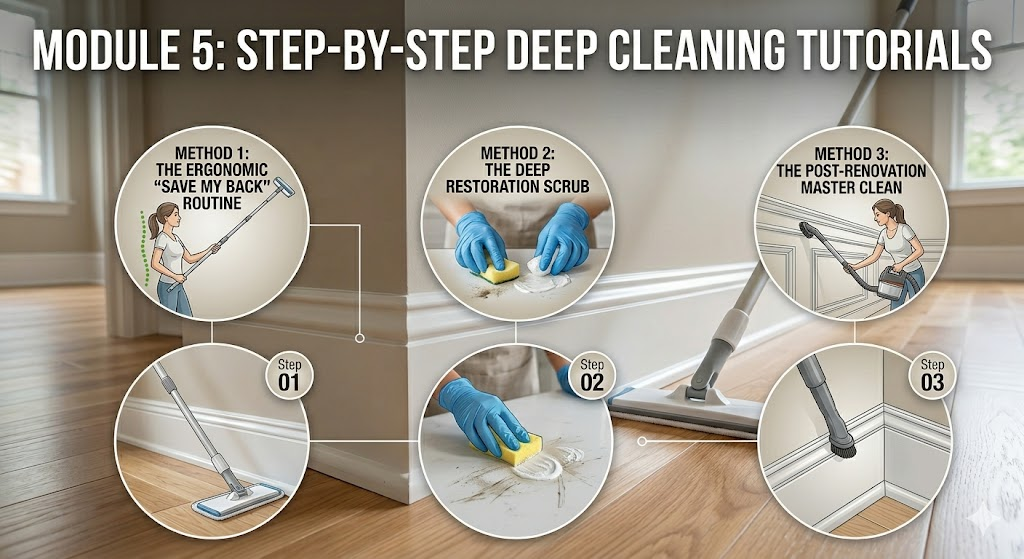
Method 1: The Ergonomic “Save My Back” Routine
This protocol is designed for standard maintenance cycles. It prioritizes skeletal protection by utilizing extended mechanical leverage, completely avoiding physical contact with the floor surface.
Required Armamentarium:
- Telescoping baseboard mop
- Microfiber cleaning sleeves
- Eco-friendly spray surfactant
- Dry static dusting pad
-
Step 01The Dry Static Extraction
Attach the dry static pad to your telescoping baseboard mop tool. Extend the handle until your back is completely straight. Walk along the room perimeter, pulling the mop head smoothly over the trim face to trap loose pet fur and airborne micro-dust before applying any liquid solutions.
-
Step 02Targeted Surface Misting
Switch the dry pad for a dense microfiber cleaning sleeve. Lightly spray your specialized cleaning solution onto the microfiber fabric rather than directly onto the wall surface. This prevents excessive wetness from puddling near sensitive floor seams.
-
Step 03Parallel Linear Shearing
Position the contoured mop head perfectly against the corner joint where the baseboard meets the floor. Apply steady, moderate horizontal pressure as you guide the tool along the wood trim. Allow the active microfiber weaves to lift and trap sticky residue away from the face plate.
Ergonomic Pro-Tip: Move your entire body along with the mop tool rather than stretching out your arms. Keeping your elbows tucked close to your torso significantly reduces stress on your lower back.
Method 2: The Deep Restoration Scrub (For Neglected Trim)
This deep restorative framework is engineered for properties undergoing a heavy deep clean or homes that have neglected floor-level maintenance for several quarters.
Required Armamentarium:
- Heavy-duty alkaline liquid or paste
- Non-scratch abrasive sponge
- Nylon detailing brush
- Ergonomic foam kneeling pad
-
Step 01Vacuum Crevice Evacuation
Run your vacuum cleaner’s narrow crevice tool directly along the top ledge shelf and the lower baseline gap to remove accumulated heavy debris, grit, and large loose particles.
-
Step 02Chemical Penetration Phase
Place down your foam kneeling pad to support your joints. Apply your specialized heavy-duty cleaner or alkaline paste directly onto stained or heavily soiled areas, focusing on carbon scuff marks. Let the active components break down the surface grime for 2 to 3 minutes.
-
Step 03Detailing and Agitation
Gently scrub the baseboard surface using a non-scratch abrasive sponge in small circular motions. Use the nylon detailing brush to clean tight corners, intricate wood profiles, and caulk lines where standard wipes cannot reach.
-
Step 04The Neutralizing Rinse Wipe
Wipe down the entire treated section with a clean microfiber cloth dampened with fresh, clear water. This removes any chemical residue that might attract loose ambient dust in the future.
Method 3: The Post-Renovation Clean (Dry Dust Mastery)
This method focuses on removing fine construction dust, such as drywall or sawdust residue, which can smear into an unsightly paste if it contacts liquid cleaners prematurely.
Required Armamentarium:
- HEPA-filtered canister vacuum
- Soft horsehair brush attachment
- Dry melamine foam block
-
Step 01High-Efficiency Suction Extraction
Equip your HEPA vacuum with a soft horsehair brush attachment. Pass the brush smoothly along the upper profile molding, pulling construction dust out of deep grooves without scratching the fresh paint.
-
Step 02Dry Paint Over-spray Shearing
If construction crews left light drops of paint over-spray or drywall mud behind, use a dry melamine foam block to carefully rub the spots away, utilizing soft mechanical friction without using water.
Module 6: The Famous “Dryer Sheet Hack” & Other Genius Maintenance Tips
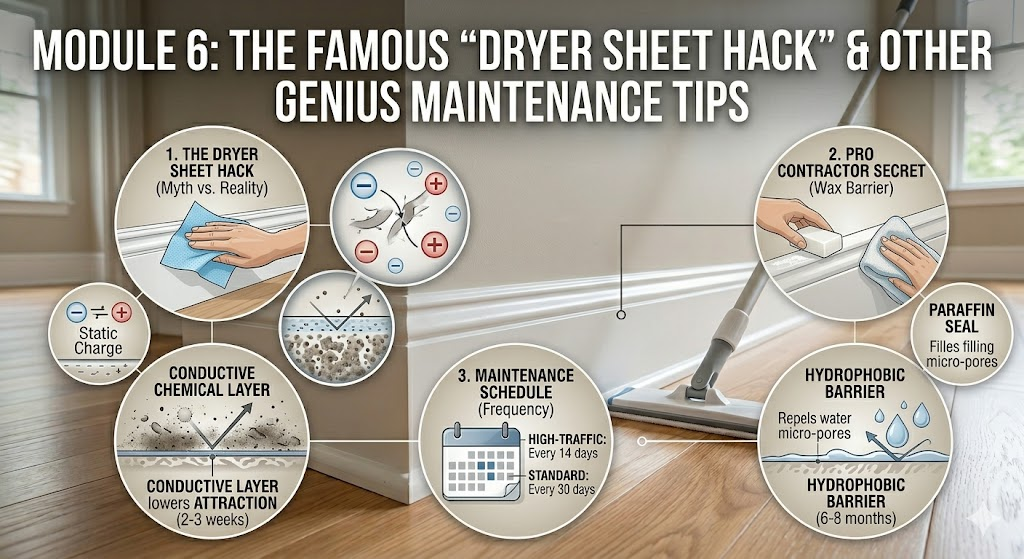
The ultimate goal of floor-level sanitation is not to develop faster ways to scrub, but to design a home ecosystem where dust cannot settle in the first place. Proactive dust mitigation significantly cuts down on the frequency with which you need heavy-duty baseboard cleaners. This section breaks down popular viral internet hacks, analyzing their practical mechanics and engineering limitations.
The Dryer Sheet Hack: Myth vs. Scientific Reality
The internet claims that wiping down architectural moldings with common laundry dryer sheets keeps them dust-free for months. Let us look past the viral social media trends and break down what actually happens during application:
The Internet Myth
Social media platforms imply that dryer sheets possess a magical repellent formula that permanently keeps dust floating in the air away from your trim profiles, ending the need to clean ever again.
The Scientific Reality
Dryer sheets are coated with cationic surfactants (often quaternary ammonium salts) that deposit a thin layer of conductive chemicals. This neutralizes the static electrical charge on the paint surface, lowering its attraction to airborne particles. It works beautifully, but it typically lasts around two to three weeks depending on indoor humidity levels.
The Pro Contractor Secret: The Candle Wax Protective Shield
While the laundry sheet trick offers great temporary protection, professional cleaning companies and historic restoration experts turn to a much more durable solution for long-term trim preservation: traditional paraffin or beeswax sealing.
💡 The Industrial Wax Guard Routine
After completing a deep restoration clean on your baseboards, allow the substrate to dry completely. Take a block of plain, unscented white candle wax or clear paste wax and rub it gently along the top horizontal ledge shelf of the trim molding. Next, use a clean microfiber cloth to buff the surface until it is smooth and clear.
This action fills in the microscopic pores and cracks in the paint or varnish. It creates a completely slick, water-repellent barrier that prevents kitchen grease and liquid splashes from locking onto the substrate. For the next 6 to 8 months, dust can be casually blown away or wiped off with a dry extensible tool in seconds, without any physical scrubbing required.
Routine Maintenance Frequency Checklist
To maximize the lifespan of these protective coatings and avoid having to scrub hardened grime, follow this maintenance schedule based on active household use:
• High-Traffic Pet Zones & Kitchens: Reapply anti-static barriers every 14 days to prevent pet oils and cooking vapor from binding dust down.
• Standard Living Rooms & Bedrooms: Perform a fast, upright dry dusting sweep every 30 days, and re-buff the candle wax barrier twice a year.
Module 7: Preventing Baseboard Damage During Cleaning
An aggressive approach to trim maintenance can often lead to collateral structural damage. When applying concentrated liquid baseboard cleaners or utilizing high-torque mechanical scrubbers, your margin for error is tightly bound by the surrounding architectural finishes. A single careless application can easily strip wall paint, swell underlying wood composite layers, or permanently stain premium perimeter flooring.
1. Shielding Wall Paints from Chemical Aggression
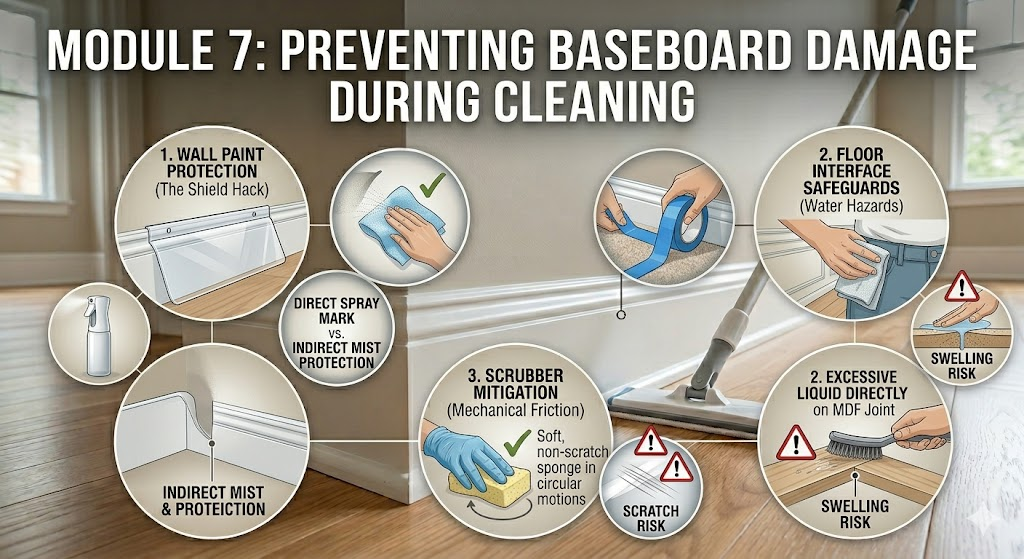
Most modern walls are coated with flat or eggshell latex paints, which are highly porous and susceptible to chemical marking. In contrast, baseboards are usually finished with highly durable semi-gloss or high-gloss industrial enamels designed to withstand heavy friction. When spraying chemicals near the wall-to-trim joint, overspray can dissolve flat wall finishes, leaving permanent, clean-looking stains or watermarks that require a full repainting to fix.
To eliminate the risk of chemical paint stripping along the upper caulk line, implement these strict operational guardrails:
- The Mechanical Shield Hack: Insert a wide plastic putty knife or a generic painters shield directly into the crease between the wall and the top shelf of the baseboard before applying your cleaner. Spray or wipe against the shield to protect the drywall coating.
- Indirect Chemical Loading: Never spray liquid solutions directly onto the trim work. Always mist the cleaning formula onto your microfiber tool sleeve first, ensuring controlled moisture delivery only to the intended glossy target.
2. Protecting Premium Flooring Substrates
The bottom seam of your baseboard sits directly against your floor covering, creating a natural gravity trap where excess cleaning chemicals can pool. This interface presents high risks for distinct types of flooring:
• Hardwood Floors: Alkaline cleaners or pooling moisture can quickly seep past the tongue-and-groove joints of perimeter planks, resulting in localized wood cupping, black tannin stains, and polyurethane finish peeling.
• Wall-to-Wall Carpeting: Liquid runoff acts as a vehicle that carries suspended trim dust deep into carpet fibers. This creates a dark, permanent line of ground-in soil along the edges, commonly known in the carpet cleaning industry as “filtration soiling.”
Prevent floor stains and structural warping with these targeted prep steps:
- Carpet Crevice Tucking: When working alongside carpeted floors, use a wide plastic putty knife to gently press low-tack painters tape down into the tiny gap between the carpet edge and the baseboard. This creates an impermeable vinyl barrier that catches runs and splashes.
- The Microfiber Swab Method: Keep a completely dry, highly absorbent microfiber cloth tucked into your waistband. Immediately follow every damp horizontal cleaning pass with a dry wipe along the bottom floor crease to catch and absorb any settling liquid droplets before they can seep into floor joints.
Module 8: Definitive FAQ & Conclusion
To conclude this comprehensive guide, we have compiled the most critical inquiries regarding floor-level sanitation. These answers condense chemical safety, mechanical frequency, and ergonomic balance to give you an immediate action plan for your next cleaning cycle.
Frequently Asked Questions
How often should you realistically clean your home’s baseboards?
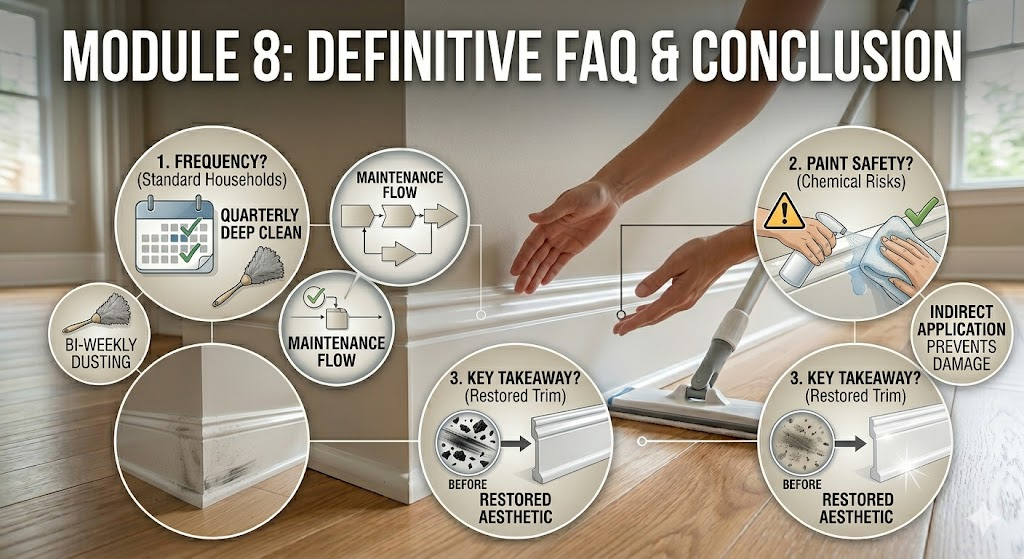
For standard households, a thorough deep clean using specialized liquid baseboard cleaners is recommended every 3 months. However, executing a dry maintenance pass with an upright telescoping tool every 2 to 3 weeks will prevent loose dust from hardening into a sticky film, making deep cleanings much faster and easier.
Can you use laundry fabric softener sheets to clean painted MDF trim?
Yes. Wiping dry baseboards with common dryer sheets deposits a micro-thin anti-static coating that neutralizes electrostatic pull. This process significantly slows down dust collection for about 2 to 3 weeks. However, ensure the trim is already clean, as dryer sheets are meant to repel new dust rather than scrub away heavy, pre-existing grime.
Will liquid chemical cleaners warp or ruin modern baseboards?
It depends heavily on the core material. Resilient vinyl, PVC, and ceramic tile baseboards are highly waterproof and chemical-resistant. However, modern painted MDF (Medium-Density Fiberboard) is incredibly vulnerable to water. If liquid pools along the bottom unsealed seams of MDF, it will swell, blister, and ruin the profile permanently. Always apply liquids indirectly via a damp microfiber pad rather than spraying the trim directly.
What is the absolute best way to clean baseboards without bending over or kneeling?
The best physical approach is pairing an adjustable, telescoping baseboard mop with a contoured pad that matches the molding’s shape. This tool lets you apply steady mechanical pressure along the faceplate and top shelf from a comfortable, standing position, completely removing lower back strain and knee pressure.
Final Takeaway: From Grime to Architectural Frame
Maintaining immaculate baseboards does not have to mean enduring intense physical pain or spending hours on your hands and knees. By understanding the chemical makeup of floor-level dirt and shifting away from outdated manual scrubbing, you can protect both your home’s surfaces and your physical well-being.
Investing in the right extensible mops, formulating gentle eco-friendly solutions, and applying smart anti-static tricks transforms this universally avoided chore into a fast, manageable, and highly rewarding maintenance step. Take care of your architectural trim, and it will beautifully frame the rest of your home for years to come.
References & Technical Sources
The architectural insights, chemical formulas, and ergonomic data compiled throughout this definitive guide were developed using established interior design standards, occupational health principles, and chemical safety guidelines. The sources below are compiled in standard APA format:
- American Institute of Architects. (2022). Architectural graphic standards for residential millwork and trim profiles (12th ed.). John Wiley & Sons.
- Centers for Disease Control and Prevention. (2024). Ergonomics and musculoskeletal disorders: Preventing cumulative trauma from household and industrial cleaning activities. National Institute for Occupational Safety and Health (NIOSH). https://www.cdc.gov/niosh/topics/ergonomics/
- Composite Panel Association. (2023). Medium Density Fiberboard (MDF) installation and moisture management guidelines. Clean Trim Publishing.
- Environmental Protection Agency. (2024). Evaluating safer choice surfactants for residential surface cleaners: Overcoming volatile organic compounds (VOCs) in confined spaces. EPA Green Chemistry Program. https://www.epa.gov/saferchoice/
- Schwarcz, J. (2021). The chemistry of everyday life: Surfactants, saponification, and how static electricity binds household dust. McGill University Office for Science and Society.