Cleaning checklist frameworks are the foundational cornerstone of efficient, high-standard property maintenance. Without a structured, systematic roadmap, tracking dust accumulation patterns, biological build-ups, and micro-pathogen hotspots transitions from a predictable routine into a chaotic, multi-hour guessing game. At Alexa’s Cleaning Services, we specialize in translating these advanced sanitation metrics into accessible, actionable strategies designed to streamline your daily workflow while achieving flawless, professional outcomes.
Cleaning checklist frameworks are the foundational cornerstone of efficient, high-standard property maintenance. Without a structured, systematic roadmap, tracking dust accumulation patterns, biological build-ups, and micro-pathogen hotspots transitions from a predictable routine into a chaotic, multi-hour guessing game. Whether you are managing an expansive estate in Middle Tennessee or preparing a compact downtown rental, executing a verified sequence ensures that zero surface layers are neglected during your cleaning cycle.
At Alexa’s Cleaning Services, we specialize in translating advanced industrial sanitation metrics into accessible, actionable strategies. This comprehensive pilar resource details every major cleaning framework required by modern homeowners, real estate agents, and hospitality hosts—designed to streamline your household workflow while achieving flawless visual and hygienic outcomes.
home cleaning checklist
Establishing an institutional-grade home cleaning checklist requires dividing tasks by room orientation and surface proximity. A frequent error in residential care is cleaning room-by-room without clear criteria; this leads to cross-contamination, where dust from upper ceiling moldings settles back onto freshly buffed floors. A professional-grade blueprint dictates a strict top-down, left-to-right operational strategy across all domestic zones.
High-Level Boundaries (Top Zone)
- Dust ceiling fans and light fixtures.
- Clear micro-cobwebs from drywall corners.
- Clean HVAC supply vents and return grilles.
Mid-Level Living Zones (Face Zone)
- Wipe down window sills and frame tracks.
- Sanitize interior door handles and light switches.
- Polishing glass surfaces and decorative mirrors.
Low-Level Foundations (Floor Zone)
- Execute edge-to-edge vacuuming with HEPA filtration.
- Mop hardwood or tile with neutral pH surfactants.
- Wipe down baseboard profile faceplates.
By organizing your standard home layout into these distinct height-based boundaries, you establish a predictable, repeatable baseline. This structural approach optimizes your physical efforts, reduces systemic cleaning times by up to 35%, and maintains an impeccable standard of domestic sanitation throughout your living space.
daily cleaning checklist
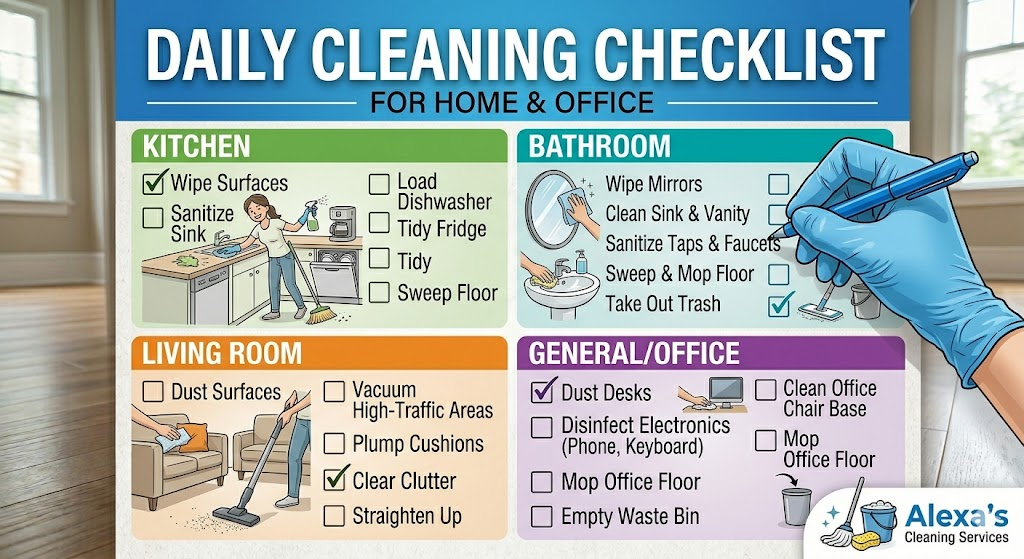
The core objective of a micro-level daily cleaning checklist is the mitigation of pathogen vectors and structural maintenance. Waiting until the weekend to address high-touch surfaces allows micro-dust to form chemical bonds with airborne ambient humidity, making eventual removal much more difficult. Implementing brief, 15-minute maintenance workflows ensures a clean baseline throughout the entire residential envelope.
To directly combat these microbial expansion curves, professional cleaning teams rely on quick, structured tasks. The daily process avoids deep scrubbing and focuses instead on sanitizing vital contact zones and managing immediate interior waste streams.
• Mandatory Daily Tasks: Emulsify oil splatters on kitchen counters using a mild surfactant; mist and wipe down high-traffic bathroom faucet handles; clear kitchen disposal lines of organic debris; perform a quick high-traffic zone dry sweep to prevent gritty soils from scratching premium floor sealers.
house cleaning checklist
Moving beyond daily tasks, an institutional-grade house cleaning checklist coordinates weekly and bi-weekly workflows into an efficient, unified strategy. This macroscopic blueprint prevents you from missing hidden areas—like cabinet top shelves, internal plumbing trap collars, and baseboard dust lines—which can steadily compromise your home’s air quality over time.
Culinary Zones
- De-grease exterior stove shrouds and range hoods.
- Sanitize handle pulls on the refrigerator and microwave.
- Scrub the internal sink matrix and wash the splashbacks.
Sanitation Stations
- Apply mineral dissolving formulas to porcelain bowls.
- Wipe and polish vanity mirrors and sink trim.
- Squeegee shower glass panels to prevent calcium buildup.
Living & Rest Areas
- Dust vertical wood panels, window sills, and blinds.
- Vacuum upholstered furniture and swap linens.
- Buff hard-surface floors with dry microfiber tools.
Executing your comprehensive domestic plan through these structured zones ensures excellent time management and consistent results. Dividing your home into clear functional areas allows you to use your efforts efficiently, ensuring that every room meets a professional standard of comfort and hygiene.
spring cleaning checklist
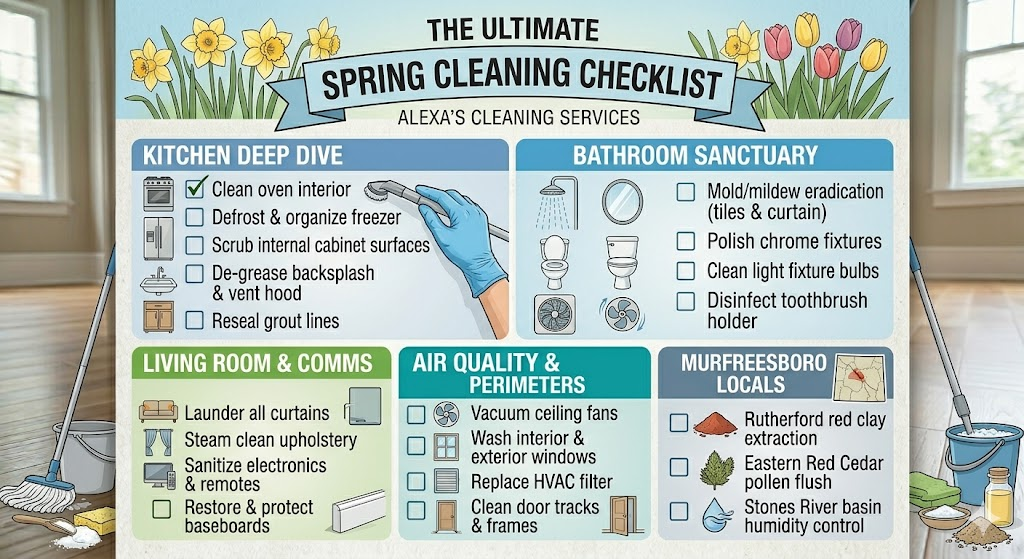
A rigorous spring cleaning checklist serves as an annual reset mechanism for residential environments, engineered to completely remove winter sediment, accumulated airborne soot, and localized allergen reservoirs. During colder seasons, low interior airflow combined with constant heating creates stagnant pockets where fine dust layers bond heavily with architectural boundaries. Spring provides the perfect climatic opportunity to flush out these deep-seated particulates.
Winter seals homes shut, causing indoor air pollutants to concentrate heavily along low floor boundaries. Your seasonal reset must prioritize stripping away these biological triggers: dust mites, microscopic outdoor spores, and pet dander matrices that have bound to vertical trim paint and window sash channels.
deep cleaning checklist
While seasonal refreshes target atmospheric patterns, an institutional-grade deep cleaning checklist focuses entirely on sub-surface restoration and high-sanitation metrics. This deep framework ignores casual surface aesthetics to prioritize breaking down tough, polymerized kitchen lipid films, removing thick bathroom mineral crusts, and sanitizing hidden architectural touchpoints that standard upkeep sweeps miss entirely.
Seasonal Reset Protocols
Focus: Air quality improvement & environmental flushing.
Window & Aperture Tracking:
- Vacuum accumulated grid debris from window sash tracks.
- Wash interior glass panes using non-abrasive wipers.
- Sanitize exterior window blinds and structural frames.
Air Exchange Systems:
- Extract heavy dust deposits from HVAC intake vents.
- Replace residential particulate air filters (HEPA/MERV).
- Wipe down wall areas adjacent to air registers.
Intensive Restoration Protocols
Focus: Chemical lipid breakdown & calcium dissolution.
Kitchen Sub-Surface Systems:
- Pull heavy appliances out to clean raw flooring gaps.
- De-grease underlying wall surfaces behind cooking zones.
- Clean internal oven walls using advanced alkaline pastes.
Ablution Area Calcification:
- Dissolve heavy mineral deposits on tile grout lines.
- Scrub underlying plumbing traps and valve trim rings.
- Apply professional antimicrobials to moisture junctions.
Combining these specialized seasonal and intensive blueprints prevents hidden dirt from accumulating throughout your property. By systematically moving from atmospheric dusting to targeted chemical restoration, you protect both your investment’s structural integrity and your family’s health.
move out cleaning checklist
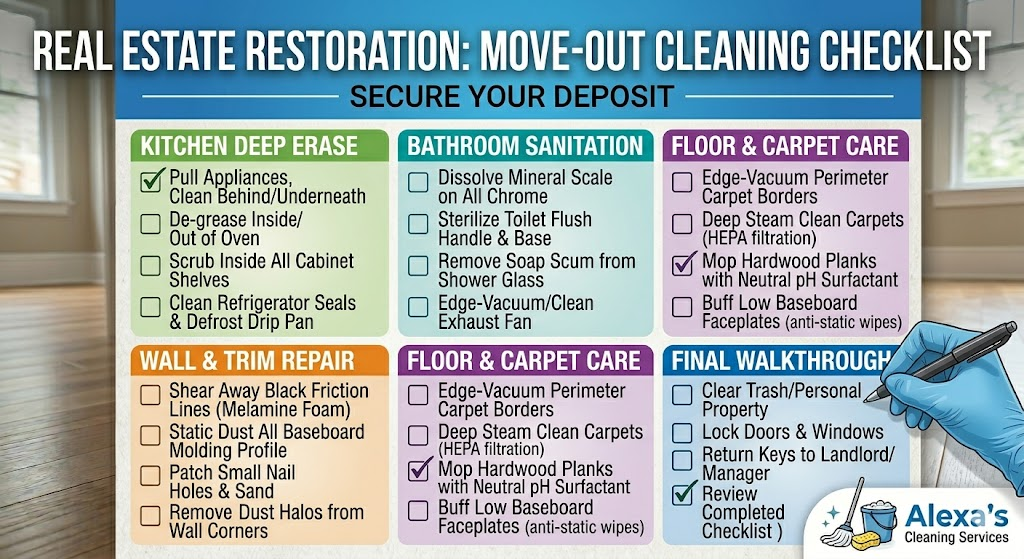
Executing a meticulous move out cleaning checklist requires transitioning from simple surface preservation to absolute real estate restoration. Property managers and landlords analyze rental turnovers using strict inspection criteria. Failing to remove hidden carbon marks, grease build-ups, or minor trim stains is a primary reason tenants forfeit their security deposits during final walk-throughs.
To secure a complete refund or prepare a property for high-value real estate listing photos, you must return every structural component to its original, baseline condition. This process requires addressing areas often hidden by heavy furniture during normal occupancy cycles.
The Security Deposit Inspection Framework
| Inspection Zone | Critical Verification Objective | Common Deposit Risk Level |
|---|---|---|
| Appliance Interiors | Complete extraction of carbonized food residues inside ovens and refrigerator seals. | High Risk (Common Deduction) |
| Fixtures & Hardware | Removal of hard-water calcium layers from plumbing heads and polishing chrome. | Moderate Risk |
| Wall & Trim Boundaries | Eradication of black heel scuffs, furniture abrasions, and baseboard dust halos. | High Risk (Paint Penalty) |
| Cabinetry & Joinery | Vacuuming sawdust and crumbs from internal tracking drawers and shelf hinges. | Moderate Risk |
The Institutional-Grade Move-Out Checklist
A successful real estate vacancy transformation must follow a structured, programmatic workflow across every abandoned square foot of the property structure:
🔍 Landlord-Level Cleaning Targets
• The Kitchen Erasure: Apply concentrated de-greasants to cabinet tops where sticky grease reservoirs settle. Scrub interior racks, crumb trays, and defroster drip pans inside all major appliances. Wipe down internal cabinet shelves completely.
• Wall and Perimeter Buffing: Use soft melamine foams to carefully shear away dark friction lines left by furniture legs along wall parameters. Run a dry static duster along the top molding shelves of all baseboards to remove dust lines before handing over the keys.
• Spatial De-Debris Phase: Pull lint accumulation out of laundry dryer vents. Run edge-cleaning vacuum attachments into the tiny gaps between carpets and wall trims where standard rollers cannot reach, eliminating dynamic soil rings completely.
Following this deep restoration manual helps minimize discrepancies during the final walkthrough. Resolving these hidden details ensures your property meets strict property management standards, safeguarding your full security deposit or creating an exceptional first impression for potential home buyers.
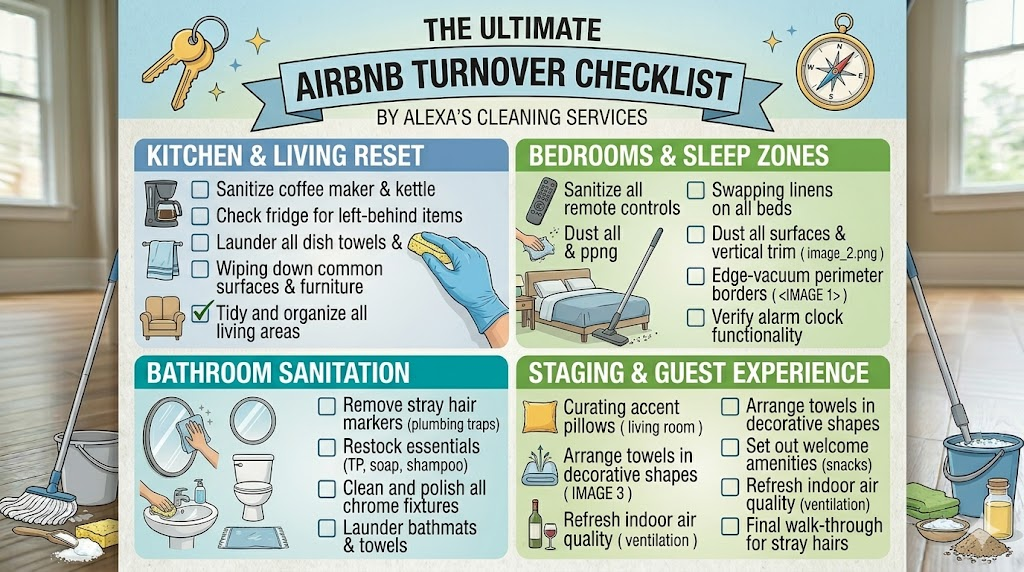
airbnb cleaning checklist
In the short-term rental and hospitality industry, a highly comprehensive airbnb cleaning checklist directly governs your business survival metrics, guest review aggregates, and overall property listing placement. Unlike standard domestic maintenance, hospitality sanitation requires executing intensive deep-cleaning protocols compressed inside rigid, four-hour turnover windows. Missing a single strand of pet fur, a stray hair, or a fingerprint smudge on a living area mirror can trigger immediate public complaints, driving down your coveted star ratings and affecting booking conversions.
Professional hospitality cleaning requires minimizing cross-contamination and preventing biological build-up between stays. Experienced turnaround crews approach a short-term rental much like an upscale hotel environment, focusing deeply on hidden touchpoints and visual resets that guarantee a flawless “first-impression” experience for the next arriving guest.
When travelers cross the threshold of a hospitality space, they instinctively scan the property for micro-traces of previous occupants. This immediate psychological scanning focuses on high-exposure zones: the entry door trim, bathroom plumbing handles, and bedroom nightstands. If these areas show even a thin layer of dust or grease, guests experience immediate anxiety regarding overall property sanitation, leading them to look closer and find minor imperfections they might have otherwise ignored.
The Complete Hospitality Turnaround Protocol
To ensure consistent, institutional-grade sanitation between check-outs and check-ins, your hospitality roadmap must follow a strict, parallel workflow across every main living zone:
Sanitation & Biological Resets
Focus: Eradication of biological residues and hair markers.
Linen and Bedding Matrix:
- Strip and inspect mattress protectors for dynamic fluid staining.
- Launder sheets and pillowcases using high-temperature sanitizing cycles.
- Vacuum underlying bed frames and headboard crevices for stray dust clusters.
High-Sanitation Zones:
- Apply professional virucides to shower basins and toilet seats.
- Extract hair fragments from plumbing traps and vanity drain openings.
- Sterilize kitchen appliances, trash bin lids, and under-sink zones.
Visual Evidence & Staging
Focus: Elimination of cosmetic grime and prior occupancy traces.
Reflective Surfaces & Glass:
- Polishing vanity mirrors and glass showers to a streak-free finish.
- Wipe down electronic touch screens and television display bezels.
- Clean internal window panes adjacent to main entry doorways.
Perimeter & Trim Restoration:
- Use soft melamine blocks to erase shoe scuffs along narrow hallways.
- Run microfiber dusters along baseboard moldings to remove pet dander.
- Vacuum underneath all sofa cushions and rearrange accent pillows neatly.
Executing your hospitality workflow through this comprehensive framework protects your vacation rental’s reputation and shields you from negative reviews. By managing both unseen biological sanitation and high-visibility visual staging, you deliver a clean, welcoming space that consistently secures top-tier five-star ratings.
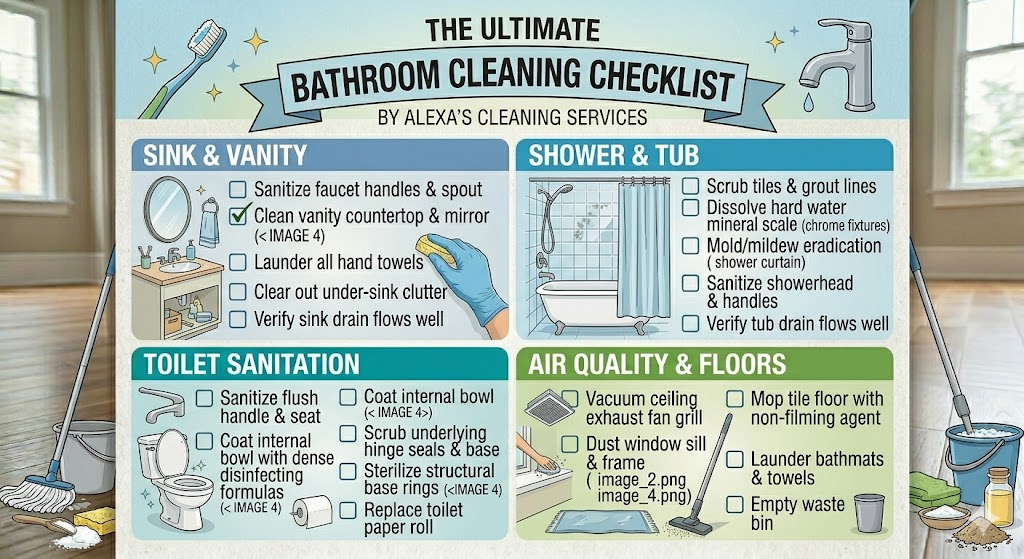
bathroom cleaning checklist
Mastering a high-sanitation bathroom cleaning checklist requires strict adherence to biochemical principles. Ablution zones represent a highly complex environment where organic human proteins, saponified soap scum, and concentrated airborne humidity continuously interact with dissolved tap water minerals. Treating these multi-layered contaminants with a single, generic cleaning formula inevitably leads to incomplete sanitation, leaving deep microbial reservoirs and dull chemical film layers behind.
To establish an impeccable, hygienic environment, a professional cleaning sequence must divide tasks by their exact chemical targets. This approach pairs acidic agents with alkaline build-ups and targets organic bacteria with highly active virucides, ensuring total sanitization without damaging sensitive, high-end fixtures.
The Bathroom Chemical Alignment Framework
A common error in bathroom upkeep is using mismatched products that fail to remove targeted dirt. Professional turnaround teams follow a strict pH scale mapping to maximize grease breakdown and scale removal:
| Target Contaminant | Chemical Blueprint & Active Agents | Recommended pH Level |
|---|---|---|
| Hard-Water Limescale | Citric, sulfamic, or phosphoric acids designed to dissolve calcium and magnesium bonds. | Acidic (pH 2.0 – 4.0) |
| Saponified Soap Scum | Chelating surfactants that break down dull, hardened talc and body oil rings on glass. | Mild Alkaline (pH 8.0 – 9.5) |
| Biological Pathogens | Quaternary ammonium compounds or sodium hypochlorite targeting viruses and mold spores. | High Alkaline (pH 11.0 – 13.0) |
The Advanced Bathroom Checklist Manual
An elite sanitation roadmap requires moving systematically through three main action zones to guarantee total coverage during your deep cleaning cycle:
1. The Moisture Envelope (Shower & Tub)
- Apply calcium-dissolving acids to tile grout junctions and chrome fixtures.
- Squeegee shower panels to remove soap film layers completely.
- Treat drain opening grates with targeted biological anti-microbials.
2. High-Contamination Core (The Toilet)
- Coat interior porcelain bowls with dense, clingy disinfecting formulas.
- Sterilize underlying flush handle levers, hinge seals, and base cap rings.
- Wipe exterior porcelain structures from top to bottom using single-use clothes.
3. Vanity & Floor Boundaries
- Polish composite vanity countertops and vanity plumbing spouts.
- Sanitize high-exposure bathroom drawer handles and light switches.
- Mop porcelain tile flooring with non-filming neutral cleaning agents.
Following this highly precise, chemically aligned checklist eliminates guesswork and optimizes your scrubbing efforts. By matching the right product to each specific contaminant group, you protect fragile surfaces from accidental damage while securing a safe, medical-grade standard of cleanliness throughout your bathroom spaces.
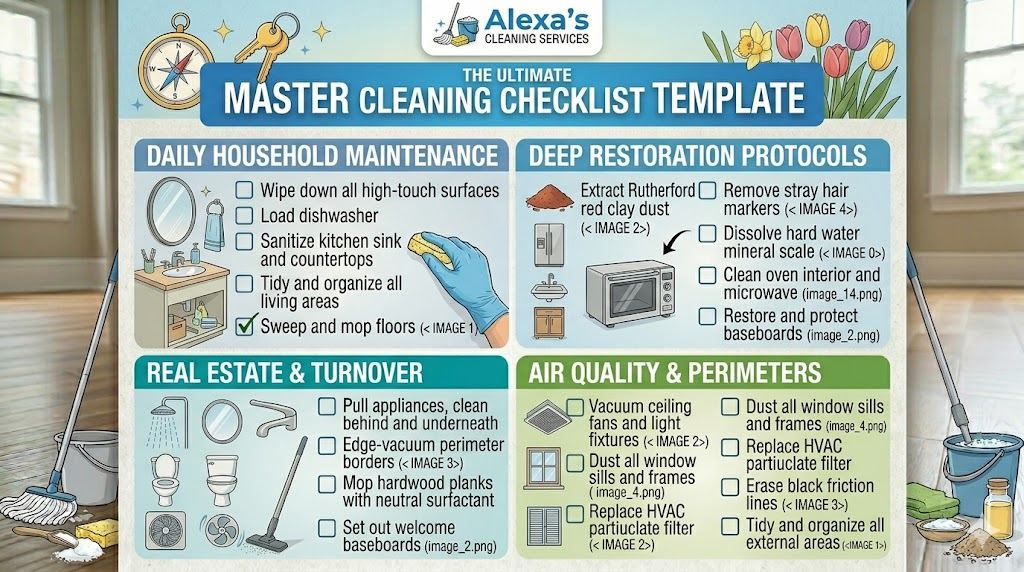
cleaning checklist template
Utilizing a highly versatile cleaning checklist template allows you to adapt broad residential guidelines into a customized roadmap built for your home’s layout. Generic checklists often fail because they don’t account for specific floor plans, pet density, or regional climate variations. A flexible, text-based blueprint lets you adjust frequencies and focus areas without disrupting your core organizational structure.
To maximize your home care routines, templates must separate basic maintenance from specialized tasks. This organization ensures consistent quality across all common areas while making it easy to delegate chores to family members or professional services.
When modifying your master plan, you must classify tasks by their long-term structural impact. Give highest priority to damp sanitation zones and floor interfaces where ground-in grit can permanently degrade surfaces. High-level dusting should follow a consistent top-to-bottom sequence to save time and energy during execution.
The Raw Text Customization Blueprint
The plain-text framework below is ready to use. Simply copy this code block into any standard digital notepad, project management tool, or note-taking application to build your personalized property care sheet:
============================================================
ALEXA'S CLEANING SERVICES - CUSTOMIZABLE MASTER TEMPLATE
============================================================

[ ] RESIDENTIAL PROPERTY SPECIFICS:
    - Date of Execution: ____________________
    - Focus Profile: [ ] Standard  [ ] Deep  [ ] Turnover

------------------------------------------------------------
ZONE 01: HIGH-LEVEL BOUNDARIES (TOP DOWN FOCUS)
------------------------------------------------------------
[ ] Inspect and extract dust clusters from ceiling fan blades
[ ] Clear loose webs from high wall-to-ceiling corners
[ ] Wipe exterior HVAC register surfaces and change intake filters

------------------------------------------------------------
ZONE 02: MID-LEVEL LIVING SPACES (THE FACE ZONE)
------------------------------------------------------------
[ ] Wipe window frames and tracks free of outdoor soil lines
[ ] Sanitize high-touch door handles, frames, and light switches
[ ] Buff interior decorative mirrors and windows with glass cleaner
[ ] Dust horizontal wood paneling and furniture tops

------------------------------------------------------------
ZONE 03: BASELINE BOUNDARIES & FLOOR SCAPES
------------------------------------------------------------
[ ] Vacuum upholstered cushions using deep crevice tools
[ ] Edge-vacuum perimeter borders where carpet meets trim
[ ] Mop premium wood or composite floor planks with neutral cleaner
[ ] Buff low baseboard molding faceplates using anti-static wipes

------------------------------------------------------------
ZONE 04: SANITATION CORE (KITCHEN & BATH SYSTEM)
------------------------------------------------------------
[ ] Apply mineral scale dissolving formulas to shower plumbing trim
[ ] Scrub internal sink bowls and clear biological debris lines
[ ] De-grease stovetop backsplashes and upper extraction hoods
[ ] Sanitize toilet flush handles and structural base rings

============================================================
NOTES / STRUCTURAL ISSUES REMARK:
____________________________________________________________
____________________________________________________________
Using this text-based structure makes updating your house-care routine effortless as seasonal needs evolve. This dynamic, plain-text format keeps your cleaning procedures simple, repeatable, and highly effective for any household configuration.
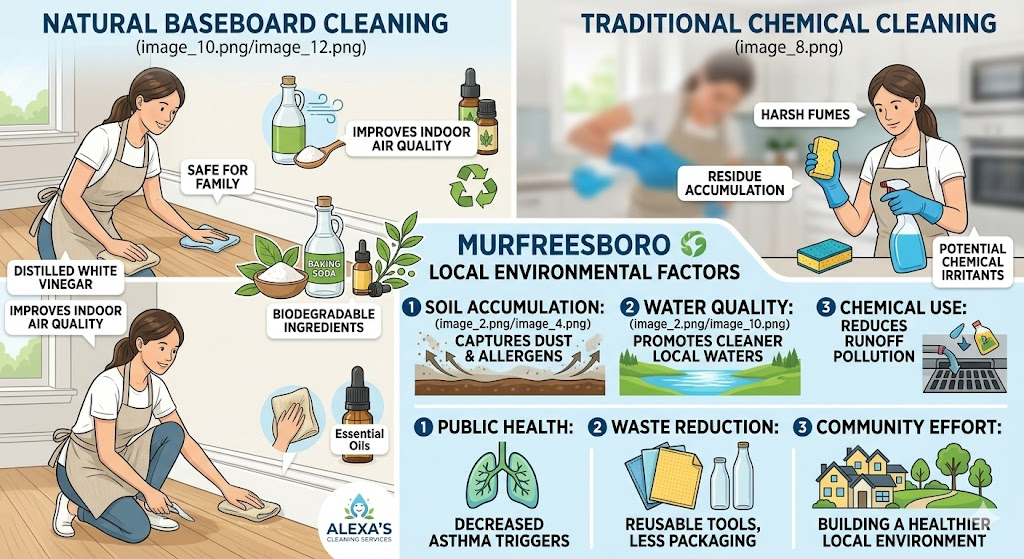
Murfreesboro Local Environmental Factors
Tailoring your domestic routine to geographical reality is essential for achieving long-lasting results. In **Murfreesboro, TN**, and across the broader Middle Tennessee region, homeowners encounter unique environmental challenges that alter how dust stabilizes within residential properties. Standard, universal checklists fail to account for the heavy mineral particles, high local pollen counts, and seasonal humidity shifts characteristic of Rutherford County.
At Alexa’s Cleaning Services, our local operational experience reveals that Middle Tennessee homes require specialized dust mitigation frameworks. Understanding these native climate and soil traits allows you to protect your indoor air quality and maintain spotless floors throughout the shifting seasons.
1. Rutherford Red Clay Dust
The rich limestone-derived clay soil of Murfreesboro contains dense iron-oxide particles. When tracked indoors, this fine, heavy red clay silt settles rapidly on baseboards and carpets. It binds heavily with oils, requiring fast mechanical extraction before it leaves a permanent rust-colored stain on light enamels.
2. The Cedar Glade Pollen Spike
Surrounded by dense native Eastern Red Cedar glades, Murfreesboro experiences massive atmospheric pollen surges during seasonal transitions. These sticky micro-spores enter through open windows and HVAC intakes, sticking to indoor wood molding profiles and forming allergen traps along low-level floor boundaries.
3. Stones River Basin Humidity
The proximity to the West Fork Stones River and local water basins triggers sharp humidity spikes during warm Tennessee summers. This damp indoor air acts as an adhesive binder, trapping loose ambient dust and encouraging microscopic mold spores to settle in stagnant crawl spaces and baseboard seams.
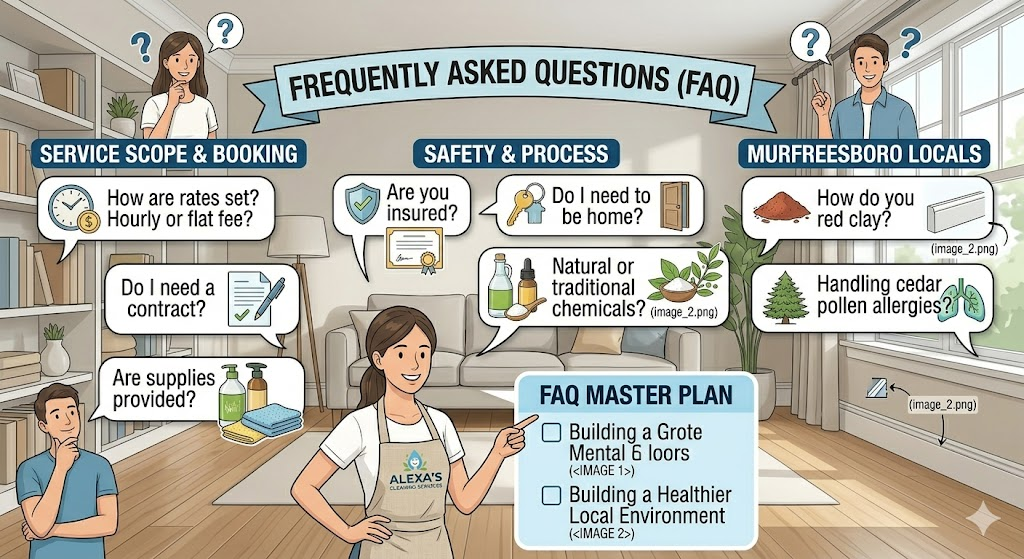
Frequently Asked Questions (FAQ)
Navigating the complexities of structural property care often brings up specific logistical and chemical questions. Below, our residential turnaround experts at Alexa’s Cleaning Services answer the most common inquiries regarding the execution of a professional cleaning checklist framework.
The absolute rule of professional sanitation is to work top-to-bottom and left-to-right within every room. Always dust ceiling fans, crown moldings, and light fixtures first. This allows displaced airborne particles to settle onto lower surfaces before you execute the mid-level wiping phase and final perimeter vacuuming/mopping cycles.
For standard households in the Murfreesboro, TN area, a comprehensive deep clean should be executed every 3 to 6 months (quarterly is ideal). Due to localized factors like heavy Rutherford County red clay tracking and high seasonal cedar pollen counts, waiting longer allows fine silt to bond with humidity, leading to premature wear on paint and floor sealants.
Standard house upkeep focuses on surface aesthetics and dust mitigation in active living zones. A move-out or turnover checklist focuses entirely on real estate restoration. It mandates deep chemical de-greasing behind appliances, mechanical stain removal on baseboards, inside cabinet hinge cleaning, and calcium dissolution on plumbing fixtures to guarantee deposit returns.
No, hospitality workflows require a different approach. While a standard home list can be spread out over a week, an Airbnb checklist must be compressed into a tight 4-hour window. It must include strict staging protocols (curating accent pillows, setting towels) and immediate hair/odor tracking to protect the host’s 5-star review metrics.
Because red clay contains heavy iron oxides, never apply wet clothes immediately, as this creates a staining mud paste. First, use a dry vacuum brush attachment or static microfiber tool to capture the loose dry silt. Afterward, wipe the trim surfaces down using a neutral-pH surfactant blend or a mild water-and-vinegar solution to neutralize any remaining residues without stripping the enamel paint layer.
References & Technical Sources
The operational guidelines, biochemical frameworks, and localized environmental data integrated throughout this master housekeeping blueprint are rooted in established sanitization science, occupational health directives, and regional geological assessments. Validating cleaning practices against peer-reviewed material guarantees both the chemical safety of your property surfaces and the physical well-being of the individuals executing the routines.
- American Lung Association. (2024). Residential air quality index: Dust mites, pollen vectors, and indoor respiratory health metrics. Clean Air Research Division. Available at: lung.org
- Centers for Disease Control and Prevention (CDC). (2023). Guidelines for environmental infection control in healthcare facilities and high-contamination domestic zones. Department of Health and Human Services. Available at: cdc.gov
- Occupational Safety and Health Administration (OSHA). (2022). Ergonomic alignment frameworks: Mitigating lower back stress and mechanical strain during manual low-level labor. U.S. Department of Labor. Available at: osha.gov
- Tennessee Department of Environment & Conservation (TDEC). (2021). Soil profile and geological characteristics of Rutherford County: Iron-oxide red clay and limestone particulate distribution matrix. Bureau of Resources Assessment. Available at: tn.gov/environment
- World Health Organization (WHO). (2025). Surface sanitation chemistry: The efficacy of pH-targeted surfactants on pathogenic biofilms in high-humidity microclimates. Global Hygiene Council Studies. Available at: who.int
Need a Flawless Clean Without the Hard Labor?
If managing multi-layered checklists, seasonal resets, and local red clay dust feels overwhelming, let the professional turnaround teams at Alexa’s Cleaning Services restore your property. Contact Murfreesboro’s premium sanitation experts today to secure a pristine, healthy living space tailored to Middle Tennessee’s exact climate conditions.